Skin Ageing by Decade: Collagen Banking, Promotion & Smart Intervention From Your 20s to Your 60s

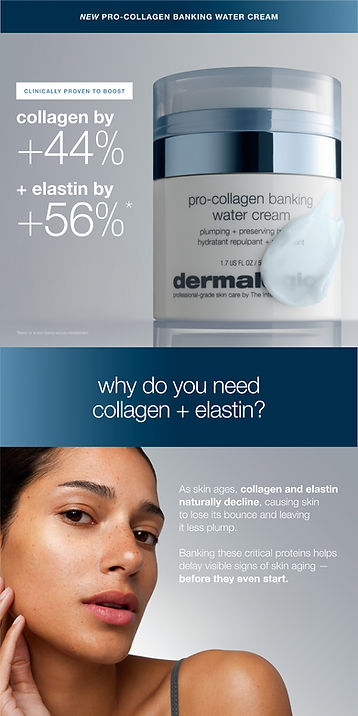
NEW: Pro-Collagen Banking Water Cream — Launching In Time for Mother’s Day
Before we go deep into tissue biology, let’s address something current.
Dermalogica’s Pro‑Collagen Banking Water Cream launches at the beginning of March — and yes, it lands perfectly ahead of Mother’s Day.
But this isn’t just seasonal timing.
It represents a shift in conversation: from “anti‑ageing” panic to collagen preservation strategy.
We’ve autoshipped the range, so it will be available in‑clinic at launch.
That matters — because collagen banking only works if it’s consistent.
Now let’s zoom out and understand why this product exists in the first place.
Skin Ageing by Decade
Ageing Is Structural, Not Cosmetic

Ageing is not a wrinkle problem.
It is a tissue management process.
From your mid‑twenties onward:
• Collagen production declines approximately 1% per year
• Elastin quality reduces
• Bone subtly remodels
• Fat pads shift
• Ligaments loosen
• Hormonal shifts accelerate change
The visible changes people notice at 45 usually began silently at 28.
The question isn’t “How do I fix ageing?”
The smarter question is:How do I protect and stimulate collagen early enough that aggressive correction becomes unnecessary?
That is collagen banking.
Collagen banking combines:
• Protection (prevent breakdown)
• Promotion (stimulate new collagen)
• Preservation (maintain what you build)
Your 20s: Peak Collagen, Hidden Damage
Biology
• Collagen density high• Elastin intact• Fat pads stable• Bone structure strong
Risks
• UV exposure• Barrier damage• Over‑exfoliation• Glycation from high sugar diets• Sleep deprivation
Strategy
Preserve first.
SPF discipline.Barrier integrity.Occasional LED support.Selective low‑depth microneedling when appropriate.
The Pro‑Collagen Banking Serum + Water Cream fit here as defence — not correction.
Your 30s: The Silent Decline
• Collagen synthesis slows• First static lines appear• Skin dullness increases• Tear trough shadow begins
Promotion Enters the Plan
Microneedling → fibroblast stimulationLED → mitochondrial supportLow‑dose neuromodulators → muscle pattern management
Daily support becomes critical:
Cleanse → Serum → Water Cream → SPF
Consistency beats intensity.
Your 40s: Structural Shifts
• Ligament laxity• Midface descent• Jawline softening• Dermal thinning
Now collagen induction must deepen.
Structured microneedling cycles.LED stacking.Skin boosters where appropriate.Preservation skincare daily.
Hydrated fibroblasts function better.
Your 50s: Hormonal Acceleration & Menopause
This decade deserves its own section.
During perimenopause and menopause:
• Oestrogen decline accelerates collagen loss
• Up to 30% collagen loss may occur in the first five post‑menopausal years
• TEWL increases
• Skin becomes thinner
• Healing slows
Oestrogen directly influences dermal thickness and collagen density.
When levels fall, skin resilience declines rapidly.
Strategic Approach
• Hormone‑aware treatment planning
• Advanced microneedling
• LED therapy
• Intensive hydration support
• Barrier reinforcement
The Pro‑Collagen Banking Water Cream becomes particularly relevant here because it:
• Fights oxidative stress
• Supports collagen + elastin preservation
• Reinforces barrier resilience
• Delivers deep hydration via water‑burst technology
Menopause is not a cosmetic problem. It is a collagen acceleration event.
Your 60s+: Regeneration With Realism
• Reduced dermal thickness
• Slower healing
• Increased fragility
Less aggression. More support.
Collagen stimulation remains beneficial — but preservation and comfort become primary goals.
Deep Dive: The Biology of Collagen Loss
To properly understand collagen banking, we need to go deeper than surface-level advice.
What Is Collagen?
Collagen is the most abundant structural protein in the human body. In skin, Type I collagen provides tensile strength, while Type III contributes to elasticity and resilience.

These fibres form an organised extracellular matrix scaffold within the dermis.
From approximately age 25:
• Collagen synthesis slows
• Matrix metalloproteinases (MMPs) increase
• UV exposure accelerates fibre fragmentation
• Glycation stiffens collagen fibres
Fragmented collagen does not simply "reduce" — it disrupts fibroblast signalling. When the matrix becomes disorganised, fibroblasts reduce production further. This creates a self‑perpetuating decline.
Collagen banking interrupts that decline by reducing daily breakdown and supporting new synthesis.
Oxidative Stress & Collagen Breakdown
Oxidative stress is one of the primary drivers of dermal ageing.
Reactive oxygen species (ROS):
• Activate MMP enzymes
• Break down collagen fibres
• Disrupt elastin
• Increase inflammation
Antioxidant‑rich formulations, including peptide complexes and botanical extracts, are designed to mitigate this pathway.

The Pro‑Collagen Banking Water Cream specifically highlights antioxidant activity and oxidative stress defence
Reducing oxidative burden slows cumulative dermal erosion.
Elastin: The Forgotten Protein
Collagen gets the headlines. Elastin rarely does.

Elastin fibres provide recoil — the ability of skin to return to shape after movement. Unlike collagen, elastin production largely stabilises after adolescence.
Loss of elastin integrity contributes to:
• Laxity
• Crepiness
• Reduced bounce
The retail data references increased elastin markers in vitro. While laboratory data differs from real‑world outcomes, elastin preservation is a critical long‑term consideration.
Collagen without elastin still results in stiffness.
Banking both matters.
Collagen Promotion: The Professional Layer

Microneedling
Controlled micro‑injury → growth factor cascade → collagen remodelling.
Requires professional assessment.
LED Therapy
Supports fibroblast mitochondrial activity without trauma.
Ideal between needling cycles.
Why Skincare Matters Between Treatments
According to the Pro‑Collagen Banking Water Cream factsheet fileciteturn0file0, key ingredients include:
• Peptide Complex with Collagen Amino Acids
• Zinc Glycinate
• Carnosine Dipeptide
• Gardenia Fruit Extract
• Extremophilic Red Algae
• White Clover Extract
Scientific backed claims include:
• +44% collagen (in vitro vs untreated skin)
• +56% elastin (in vitro)
• Visible fine line reduction in 3 days in an independent clinical study
In vitro data demonstrates biological activity.
Clinical assessment demonstrates visible outcomes with structured use.
This supports — but does not replace — professional stimulation.
Promotion without preservation wastes effort.
Prevention vs Correction: The Financial & Tissue Argument
Ten years of collagen banking typically results in:
• Stronger dermal thickness
• Better elasticity
• Reduced need for aggressive filler
• Lower long‑term cost
Late correction:
• Higher expense
• Greater intervention
• More risk
Biology rewards patience.
Frequently Asked Questions
What is collagen banking skincare?
Collagen banking skincare refers to products and treatments designed to preserve existing collagen, stimulate new production and reduce daily collagen breakdown.
Does collagen banking cream actually increase collagen?
Laboratory (in vitro) testing has shown increased collagen markers in treated skin models. Clinical results vary by individual and must be interpreted alongside professional treatments.
Is Pro‑Collagen Banking Water Cream suitable for all skin types?
Yes — the factsheet states it is ideal for all skin types, particularly those concerned with premature ageing, fine lines and hydration.
How often should I use collagen banking moisturiser?
Once or twice daily, after serum, ideally applied to slightly damp skin.
Can microneedling and collagen banking cream be used together?
Yes. Professional collagen stimulation plus daily preservation provides the strongest long‑term structural benefit.
Local Perspective: Collagen Banking in Clinic
If you’re reading this in Newcastle‑under‑Lyme or Staffordshire, collagen banking isn’t theoretical — it’s something we build into treatment planning every day.
Professional collagen induction sessions combined with structured home care create compounding results.
If you want to explore:
• Microneedling
• LED therapy
• Skin boosters
• Anti‑wrinkle prevention
• Or the new Pro‑Collagen Banking retail launch

or call 01782 444086
Because collagen loss is inevitable.
But unmanaged collagen loss is optional.

Find out more about the anti-wrinkle treatments delivered by ANP Christopher Beckett at No.1 Urban Aesthetics.

