Choosing a Safe Aesthetic Clinic in Newcastle-under-Lyme: What You Need to Know Before Booking (2026 Guide)

Updated: Mar 19
An in-depth patient guide to qualifications, safety standards, pricing transparency, clinical governance, and how to choose a reputable aesthetic provider in Staffordshire.

Introduction: The Aesthetic Industry Has Changed — But Regulation Hasn’t Fully Caught Up
Over the past decade, non-surgical aesthetic treatments have moved from niche to mainstream. Treatments such as anti-wrinkle injections, dermal fillers, skin boosters, microneedling and medical-grade skin treatments are now widely available across the UK.
In Newcastle-under-Lyme and the wider Staffordshire region, demand continues to grow. Social media visibility, celebrity influence, increased accessibility, and the rise of preventative treatments have all contributed to this expansion.
However, while the industry has evolved rapidly, regulation has not always kept pace.
Unlike many medical procedures, certain aesthetic treatments in the UK can legally be performed by individuals without formal medical qualifications. This creates a landscape where patients must take responsibility for asking the right questions before booking.
This guide has been written to help you do exactly that.
Whether you are considering anti-wrinkle injections, lip filler, skin treatments or preventative aesthetic care, this comprehensive 2026 guide will walk you through:
• What qualifications matter
• What red flags to avoid
• Why consultation is critical
l• Why pricing varies
• What clinical governance actually means
• How complication management should be handled
• What to look for locally in Newcastle-under-Lyme
Because when it comes to your face, informed decisions matter.
If you’re comparing providers locally, you can review transparent treatment costs and consultation pathways on our pricing page.
Understanding the UK Aesthetic Landscape in 2026
Is Aesthetics a Medical Procedure?
Some treatments are clearly medical.
Anti-wrinkle injections (botulinum toxin) are prescription-only medicines in the UK. This means a registered prescriber must assess and authorise treatment.
Dermal fillers, while not prescription-only, are injectable medical devices. They carry risk and require detailed anatomical knowledge.
Other treatments such as chemical peels, microneedling and advanced skin procedures also involve clinical decision-making, infection control standards, and risk assessment.
Yet despite these risks, there is currently no single mandatory qualification required for all aesthetic practitioners.
This is why patient education is essential.
What Qualifications Should an Aesthetic Practitioner Have?
When searching for “aesthetic clinic Newcastle-under-Lyme” or “Botox near me,” you may see a wide range of providers.
Here are the categories you should understand.
Registered Medical Professionals
Doctors (GMC registered)
Nurses (NMC registered)
Dentists (GDC registered)
Prescribing Pharmacists (GPhC registered)
Allied healthcare professionals ie Paramedics and Physiotherapists (HCPC registered)
These professionals:
• Are regulated by statutory bodies
• Are accountable to professional codes of conduct
• Must carry professional indemnity insurance
• Have formal medical training in anatomy and complications
You can verify registration online through public registers.
If someone states they are a nurse injector in Staffordshire, you should be able to confirm their registration number.
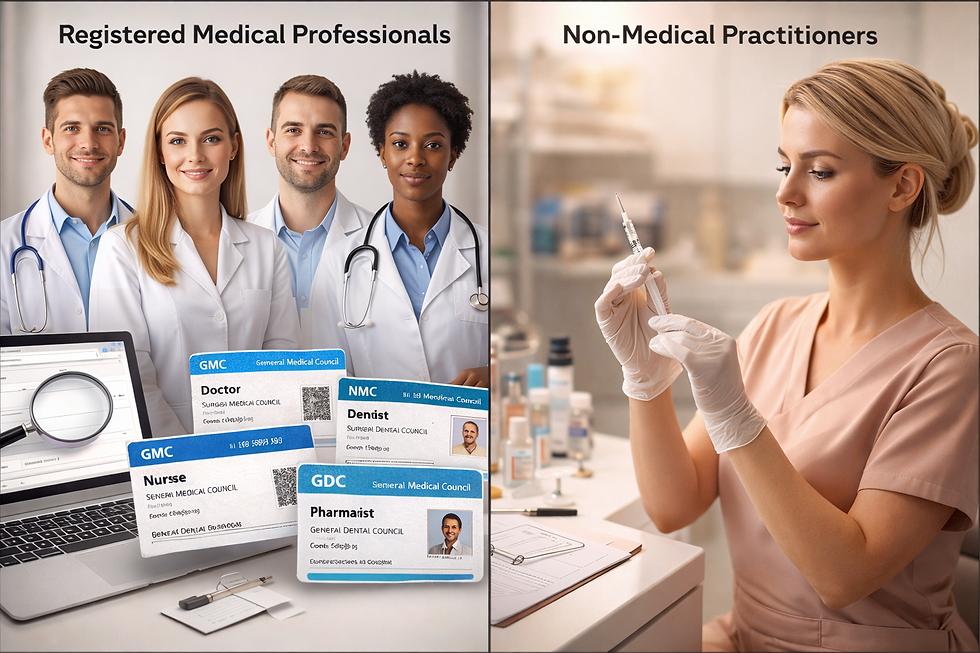
Non-Medical Practitioners
There are also experienced beauty professionals who undertake aesthetic training. However, training quality varies widely.
If booking with a non-medical practitioner, ask:
• Who is the prescribing clinician?
• What is their complication pathway?
• What advanced anatomy training have they undertaken?
• Who manages emergencies?
The key issue is not title — it is accountability and governance.
Why Anatomy Knowledge Is Non-Negotiable

Injectable treatments involve navigating complex vascular and nerve structures.
Complications such as vascular occlusion, nerve injury, infection and tissue necrosis, while rare, are real risks.
A practitioner must understand:
• Facial arterial pathways
• Danger zones (glabella, nasolabial fold, nose, temple)
• Depth variations• Safe injection planes
• Emergency reversal protocols
If your practitioner cannot clearly explain risks and anatomy in consultation, that is a concern.
The Importance of Consultation Before Any Treatment
A legitimate aesthetic clinic in Newcastle-under-Lyme should always provide a structured consultation.
This should include:
• Full medical history
• Medication review
• Allergy status
• Previous treatment history
• Psychological suitability assessment
• Discussion of expectations
• Risk explanation
• Cooling-off period where appropriate
If someone offers to inject you within minutes of meeting you, pause.
Safe practice is measured.
Why Aesthetic Prices Vary in Staffordshire

Patients often search:
• Botox price Newcastle-under-Lyme
• Lip filler cost Staffordshire
• Cheap Botox near me
Price differences reflect multiple factors:
Product Quality
Legitimate UK-sourced toxin and dermal fillers are CE marked and traceable.
Practitioner Experience
Years of clinical experience influence pricing.
Insurance and Governance
Medical indemnity and complication cover increase operating costs.
Follow-Up Care
Does your provider include review appointments?
Premises Standards
Are you being treated in a clinical environment or a non-clinical setting?
If pricing is dramatically lower than average, ask why.
Your face is not the place for bargain hunting.
Red Flags to Watch For
When choosing an aesthetic clinic in Newcastle-under-Lyme, be cautious if you notice:
• No consultation offered
• No medical history taken
• Cash-only incentives
• Heavy discount marketing
• No visible complication policy
• No professional registration details
• Pressure to book immediately
• Unrealistic transformation promises
Ethical clinics prioritise safety over speed.
Clinical Governance: What It Actually Means
Clinical governance refers to structured systems that ensure patient safety.
This includes:
• Incident reporting systems
• Complication protocols
• Infection control audits
• Secure record keeping
• Ongoing CPD
• Prescribing oversight
Many patients never ask about governance — yet it is one of the most important indicators of professionalism.
For clinics requiring prescribing, our urbanRX service provides B2B prescription and governance support.
Managing Complications: The Question Most Patients Forget to Ask
Even in skilled hands, complications can occur.
Before booking, ask:
• What happens if I experience a complication?
• Do you stock emergency medications?
• Is there 24/7 contact support?
• Do you have referral pathways?
A responsible practitioner will answer calmly and confidently.
Psychological Assessment and Ethical Practice
Ethical aesthetic practice includes assessing whether treatment is appropriate.
Red flags include:
• Body dysmorphic tendencies
• Unrealistic expectations
• Social media comparison distress
• Pressure from partners
A practitioner should feel comfortable declining treatment if clinically inappropriate.
The Local Newcastle-under-Lyme Context
Newcastle-under-Lyme and surrounding Staffordshire areas have seen growth in aesthetic providers.
Patients now have increased choice — which is positive.
However, increased availability means increased responsibility to choose carefully.
Searching for “best aesthetic clinic Newcastle-under-Lyme” should lead you to providers who demonstrate:
• Transparency
• Qualifications
• Clear pricing
• Clinical accountability
• Measured results
What Safe Practice Looks Like in 2026
Modern, reputable clinics should demonstrate:
• Detailed consent documentation
• Pre and post photographs
• Cooling-off discussions
• Structured aftercare
• Honest risk explanation
• Realistic outcome discussions

Safe practice is rarely dramatic.
It is consistent.
Questions to Ask Before Booking
Here is a simple checklist:
What are your qualifications and registration number?
What is your complication pathway?
Do you carry medical indemnity insurance?
Is there a follow-up appointment included?
What happens if I am unhappy with my result?
If the answers feel vague, reconsider.
Long-Term Aesthetic Planning vs One-Off Treatments
Increasingly, patients are shifting from reactive to preventative care.
Long-term planning may include:
• Skin health maintenance
• Collagen stimulation strategies
• Structured toxin scheduling
• Gradual enhancement
A reputable clinic will discuss strategy, not just single-session sales. Structured treatment planning often integrates medical-grade skincare and professional skin therapies to support long-term collagen health.
Why Experience Matters
Clinical experience cannot be condensed into a weekend course.
Years of hands-on patient assessment improve:
• Complication recognition
• Injection precision
• Communication skills
• Ethical judgement
Experience influences outcomes quietly — but significantly.
The Role of Reviews and Reputation
When reviewing local providers, look beyond star ratings.
Read reviews for:
• Safety comments
• Professionalism
• Follow-up care
• Natural results

Consistent feedback patterns are more important than isolated comments.
Infection Control Standards
Aesthetic procedures breach the skin barrier.
Ask about:
• Clinical waste disposal
• Sterile equipment
• Hand hygiene protocols
• Cleaning standards
A reputable clinic will operate to healthcare-level infection standards.
Insurance and Indemnity
Medical indemnity protects both practitioner and patient.
Ask:
• What level of insurance do you hold?
• Is it specific to injectable aesthetics?
This is not an awkward question.
It is responsible.

Transparency in Marketing
Be cautious of:
• Unrealistic before-and-after filters
• “Perfect” transformations
• Heavy discount countdown timers
Ethical clinics focus on education over hype.
Cooling-Off Periods and Consent
Particularly for first-time treatments, patients should be given space to reflect.
Immediate pressure to inject is a red flag.
Consent must be informed, voluntary and documented.
Final Thoughts: Safety Is Never an Upsell
Choosing a safe aesthetic clinic in Newcastle-under-Lyme is not about brand slogans.
It is about measurable standards.

The right provider will:
• Welcome your questions
• Provide clear answers
• Demonstrate qualifications
• Explain risks
• Prioritise long-term outcomes over quick wins
When it comes to aesthetic medicine, subtlety is powerful — but safety is paramount.
If you are researching treatments locally, take your time.
Your face deserves diligence, not impulse.
Frequently Asked Questions
How do I know if an aesthetic clinic is safe?
Check practitioner registration, complication protocols, consultation structure and governance processes.
Should Botox always be prescribed?
Yes. Botulinum toxin is a prescription-only medicine in the UK and must be prescribed following assessment.
Why are some clinics cheaper than others?
Differences reflect practitioner level, product sourcing, insurance, premises and aftercare provision.
Can complications happen even with experienced practitioners?
Yes, although rare. What matters is preparedness and rapid management.
If you are reviewing options locally, you can view transparent pricing and consultation details here. Or simply click on the image below.


