Polynucleotides Explained: What They Do, What the Evidence Shows, and Who They Suit

Updated: Sep 7

By Rebecca (Bex) Beckett, Registered Nurse and Co-Director, No.1 Urban Aesthetics, Newcastle-under-Lyme.
From The Urban Supplement — our long-form, evidence-led journal on skin, aesthetics and health.
There is a particular kind of complaint I hear most weeks. It is rarely about a wrinkle.
It sounds like this. My skin looks tired even when I'm not. Makeup sits differently than it used to. I don't want a different face — I just want to look like I've slept.
That is not a filler problem. It is not a toxin problem. It is a skin quality problem — and for a long time we did not have a particularly good injectable answer to it.
Polynucleotides are the treatment that changed that conversation. They are also, right now, one of the most over-promised treatments in UK aesthetics. Both things are true.
This article is the long version. What polynucleotides actually are, what the published evidence genuinely shows — including where it is thin — what a course involves, who they suit, who they do not, how they compare with everything else on the menu, and what the UK regulatory position is in 2026. No hype. No "reverse ageing". Just what I would tell you across the consultation table.

The question: what do polynucleotides actually do?
The short answer, if you only read one section
Polynucleotides are purified fragments of DNA, injected into the skin in very small amounts to improve skin quality — hydration, elasticity, texture and fine crepey lines. They are not a filler. They add no meaningful volume. They will not lift, and they will not soften an expression line caused by muscle movement.
A typical course is three sessions, two to four weeks apart, with results building over four to eight weeks and continuing to improve for three to six months. Most people have a maintenance session at around six months.
The evidence base is promising but small. A 2025 systematic review found nine studies covering just 219 patients, all of low-to-moderate quality. Where polynucleotides have been compared directly with hyaluronic acid, they performed comparably — with a measurable edge on skin elasticity, hydration, roughness and pore size, but no significant difference in overall aesthetic improvement.
In the UK, polynucleotide injectables are CE/UKCA-marked Class III medical devices, not licensed medicines. That is a real and important distinction, and it is why anyone telling you they are "MHRA approved" has got it wrong.
They are, in my clinical opinion, a genuinely useful treatment for the right patient — and a waste of money for the wrong one. Which one you are is what a consultation is for.
The human reality: the skin problem people are actually trying to solve
Who polynucleotides actually suit
In my clinic, the patients who do best share a fairly consistent profile.
The complaint is quality, not shape. Crepiness. Dullness. Skin that looks dehydrated no matter what you drink. Fine lines that appear when the skin is dry rather than when you move. A general sense of the surface being thinner and less resilient than it was.
The under-eye is the specific concern — and it is fine lines rather than hollowing. This is the single most common reason people come to me for polynucleotides, and it is where the best-designed trial sits. The distinction between crepey under-eye skin and a hollow tear trough is the whole consultation.
The skin has been through something. Perimenopause. A period of high stress. Rapid weight loss, including GLP-1 associated weight loss. Post-inflammatory change. Photodamage from years of not caring. Polynucleotides seem to do more in skin that has room to recover.
They want to prime before something else. Expert consensus recommends polynucleotides as dermal priming before laser, microneedling, radiofrequency or filler. Improving the quality of the canvas before you work on it is sound clinical logic and it is how I sequence most treatment plans.
They are cautious, and they want the least aggressive option first. Polynucleotides have a genuinely mild side effect profile. For someone nervous about injectables, this is often the right first step.
They have had filler or toxin and something still looks off. Frequently, what is missing is skin quality. Adding more volume to poor-quality skin makes the poor quality more obvious, not less.
The under-eye question
Because this is where most people arrive, it deserves its own section.
The under-eye area is unusual. The skin is the thinnest on the body — around 0.5 mm in places. There is minimal subcutaneous fat. The vasculature is close to the surface. It ages early, it shows dehydration and fatigue immediately, and it is unforgiving of heavy-handed treatment.
Polynucleotides suit it for exactly those reasons. Very small volumes, superficial placement, no projection, a mild profile, and a mechanism aimed at tissue quality rather than volume.
Here is what a course can realistically do for the under-eye:
Improve the fine crepey lines that appear when the skin is dry or when you smile
Improve hydration and surface smoothness so light reflects more evenly
Improve elasticity, so the skin sits better against the underlying structure
Make concealer sit better, which is a much more common real-world complaint than anyone admits

Here is what it cannot do:
Fill a tear trough hollow — that is a volume problem
Remove pigmentation-based dark circles — that is melanin, not skin quality
Remove shadow cast by a bony orbital rim — that is anatomy
Remove eye bags caused by fat pad herniation — that is surgical
Reduce fluid retention or puffiness caused by sleep, salt, allergy or lymphatic drainage
The most common disappointment I see with under-eye polynucleotides is in patients whose dark circles were never a skin quality problem in the first place. Twenty minutes with a torch and a mirror at consultation prevents that entirely.

Not every under-eye concern needs an injectable
There is another point worth making before we go any further. If the concern is relatively early — dehydration, fine surface creasing or skin that simply looks less resilient than it once did — an injectable is not automatically the first answer.
Topical skincare cannot reproduce what an intradermal treatment does, and it cannot correct structural hollowing. But a well-formulated eye product can still improve hydration, surface appearance and the visible quality of the skin, particularly when the changes are mild.
One recent example is Dermalogica Smart Eye Density, a topical serum developed specifically for thinning, less resilient-looking under-eye skin. Its formulation targets hydration, firmness, fine lines and visible discolouration, and Dermalogica reports improvements in measured under-eye density following regular use.
That does not make it a substitute for polynucleotides. Nor should it be presented as one.
It simply illustrates an important principle that runs through this entire article: use the least invasive intervention capable of addressing the actual problem.
For some people, that may be skincare. For others, it may be polynucleotides. For structural hollowing, neither may be the right answer.
No.1 Urban Aesthetics is an authorised Dermalogica partner and stockist. Smart Eye Density is available through the clinic.
Skin after forty, and the perimenopause overlap

There is a specific pattern I see repeatedly, most often in women between about 42 and 55, and it is worth naming because it is so often misattributed.
Skin that used to bounce back stops bouncing back. It feels drier no matter what you use. It looks dull in photographs in a way it did not before. Fine lines appear across the cheek and around the mouth that are not expression lines. Makeup sits in texture it did not sit in last year. Healing takes longer. Nothing dramatic has happened — and yet everything has changed.
Oestrogen has a substantial role in skin physiology, including collagen content, dermal thickness and hydration. The perimenopausal decline is not gradual and tidy; it fluctuates. Skin registers that.
Polynucleotides are, in my view, one of the more sensible interventions for this pattern — precisely because the complaint is quality rather than shape. The patient is not asking to look different. She is asking to look like herself again.
That is the whole positioning of this treatment. Restoration, not transformation.
If this describes you, our article on perimenopause skin changes goes into the physiology in more depth, and microneedling after 35 covers the treatment that most often pairs with polynucleotides in this group.
Acne scarring
Atrophic acne scarring is one of the more evidence-supported uses, on the strength of the small randomised trial described above.
In practice, I would almost never use polynucleotides alone for scarring. The logic of scar treatment is to combine a remodelling stimulus with a repair environment. Microneedling or fractional resurfacing provides the stimulus. Polynucleotides provide the environment — the anti-inflammatory, pro-angiogenic, fibroblast-supportive conditions in which remodelling happens better.
Expert consensus supports polynucleotide priming sessions before resurfacing, and repeat sessions afterwards to support healing.
Realistic expectations matter enormously here. Atrophic scarring responds slowly, partially and over many months. Anyone offering to clear it in three sessions is selling something.
Neck, décolleté and hands
These three areas are where I find polynucleotides most quietly satisfying, and they are chronically under-treated.
The neck and décolleté have thin skin, fewer sebaceous glands, less structural support and — in most people — decades of sun exposure that the face was protected from. They also tolerate volumising treatments poorly. A skin quality treatment placed in very small aliquots across the area is well suited to the anatomy.
Published real-world data on polynucleotide skin rejuvenation reports moderate-to-significant improvement in over 93% of neck treatments and over 88% of décolletés — though that study was uncontrolled, unblinded and used subjective global scales, so treat the percentages as directional rather than precise.
The realistic outcome across all three is better texture and hydration and softer fine crepiness. Not tightening. Not lifting. Not the removal of sun-induced pigmentation, which needs a different tool entirely.
Who they do not suit
Anyone whose actual problem is volume loss. If the mirror complaint is hollowness or flatness, polynucleotides will not address it, and I will say so.
Anyone whose actual problem is significant laxity. Skin quality treatments do not tighten sagging tissue.
Anyone expecting a result in a fortnight. If you have an event in three weeks, this is not the treatment. Book the course after it.
Anyone who is pregnant or breastfeeding. No safety data. We do not treat.
Anyone with a significant fish or seafood allergy — see below.
Anyone whose expectations are not achievable by any injectable. If the consultation reveals that the underlying distress is not proportionate to the physical finding, the right clinical answer is to decline and have a different conversation. That is not a sales technique. It is the job.
The biology: what is happening under the skin
What polynucleotides actually are:
Polynucleotides — PN for short — are long chains of purified, fragmented DNA.
The source is salmonid fish: rainbow trout (Oncorhynchus mykiss) and chum salmon (Oncorhynchus keta). Specifically, the gonadal tissue. Yes, that is where the "salmon sperm facial" headline comes from, and we will deal with that properly in a moment, because it deserves a proper answer rather than an eye-roll.
The DNA is extracted and then put through an extensive purification process designed to strip out everything that is not DNA. Proteins, peptides, cellular debris — removed. What is left is a sterile, standardised polymer of deoxyribonucleotides suspended in a physiological solution.
That polymer does two things when it is placed into the dermis. It behaves as a physical scaffold that binds water. And it is gradually broken down into smaller nucleotide fragments that interact with your own cells.
Both matter. But they matter on very different timescales, which is one of the reasons people misjudge this treatment in the first fortnight.
PN versus PDRN — and why the distinction is oversold
You will see both acronyms, often used as if they were interchangeable. They are not quite.
PDRN — polydeoxyribonucleotide — refers to the shorter-chain material, conventionally defined as a mixture of deoxyribonucleotides in the 50 to 1,500 kilodalton range. It is less viscous, more diffusible, and it is the entity with the deeper pharmacological literature behind it. In Italy and South Korea, PDRN exists as a registered medicine for wound healing and joint conditions.
PN — polynucleotide — refers to the higher molecular weight material, conventionally above 1,500 kDa. Longer chains. More viscous. More gel-like. The extra claimed advantage is that those longer chains form a three-dimensional hydrogel scaffold in the dermis, holding water and providing a temporary physical framework.
Here is the honest caveat. That molecular weight cut-off is a convention, not a regulatory definition. Manufacturers vary. Marketing material frequently treats "PN, not PDRN" as a mark of superiority in a way the evidence does not support.
What you should take from it is this: the shorter-chain material has the stronger pharmacological pedigree, the longer-chain material has the additional physical scaffold effect, and most aesthetic products in the UK sit in the higher molecular weight range. Nobody has run the head-to-head trial that would settle which is better for facial skin quality.
How polynucleotides work
There are four mechanisms worth understanding. Two are well established in the laboratory and animal literature. Two are more plausible than proven.
1. Adenosine A2A receptor activation — established
This is the mechanism with the most solid pharmacology behind it. As polynucleotide fragments are broken down in tissue, the resulting nucleosides act on the adenosine A2A receptor on the surface of fibroblasts, endothelial cells and immune cells.
Activating that receptor produces a fairly specific downstream pattern. Increased VEGF and new small blood vessel formation. Reduced pro-inflammatory signalling — tumour necrosis factor alpha and interleukin-6 go down. Increased interleukin-10, which is anti-inflammatory.
We know this is the key pathway because in animal models, blocking the A2A receptor abolishes most of the effect. That is proper mechanistic evidence, not marketing.
Practically: this is why polynucleotides behave like a calming, tissue-recovery treatment rather than an irritant one, and it is why they have historically been used in wound healing rather than cosmetics.
2. The purine salvage pathway — established
Making DNA from scratch is metabolically expensive. Cells much prefer to recycle.
When polynucleotides are broken down, they release nucleosides and nucleotides that neighbouring cells can pick up and reuse for their own DNA synthesis and repair, bypassing the energy cost of building them from raw materials.
This matters most in tissue that is stressed, hypoxic or damaged — which is precisely the environment of chronically sun-exposed, inflamed or ageing skin. It is a plausible explanation for why the effect appears to be more pronounced in poorer-quality skin than in already-excellent skin.
3. Fibroblast stimulation and matrix remodelling — established in the lab, inferred in the face
Fibroblasts are the cells that manufacture collagen, elastin and the ground substance that sits between them. In laboratory culture and in animal wound models, polydeoxyribonucleotide reliably increases fibroblast proliferation and collagen production.
What we have far less of is human facial histology. Most aesthetic studies measure surface parameters — elasticity, hydration, roughness — rather than taking biopsies. So the collagen story is well supported at cell level and reasonably inferred at face level, but it is not directly demonstrated in most published aesthetic protocols.
I would rather say that plainly than repeat "stimulates collagen" as though it had been proven in your cheek.
4. Water binding and physical scaffolding — plausible, not proven in isolation
The longer polynucleotide chains are hygroscopic. They hold water. The commercial explanation for the immediate soft plumping people notice in the first few days is that the gel is simply sitting in the dermis holding onto fluid.
Biophysically this is entirely credible. It has not, to my knowledge, been isolated and measured as a distinct clinical mechanism in humans. So I treat it as the likely explanation for the early effect, and I make sure patients understand that the early effect is not the result.

The evidence: what the published research actually shows
What the evidence actually says
This is the section most clinic websites skip. It is the one that matters most.
The systematic review
The most important single reference is a 2025 systematic review published in the Journal of Cosmetic Dermatology by Lampridou, Bassett, Cavallini and Christopoulos, registered on PROSPERO. It pooled the aesthetic literature on polynucleotides.
It found nine studies, covering 219 patients in total. All were assessed as low-to-moderate quality.
The findings were genuinely encouraging: reductions in wrinkle appearance, improvements in texture and elasticity, several statistically significant, adverse effects mild and transient, patient satisfaction moderate to high.
The conclusion was equally clear — there is limited consensus on optimal use, and rigorous high-quality studies are essential.
Two hundred and nineteen patients is not a lot. For context, a single pivotal trial for a licensed medicine will often involve several hundred. So when someone describes polynucleotides as "clinically proven", the accurate version is: "supported by a small and growing body of low-to-moderate quality evidence, with promising results and no large trials yet."
The under-eye trial

The best-designed aesthetic study is a randomised, double-blind, pair-matched split-face trial by Lee and colleagues, published in the Journal of Dermatological Treatment in 2022. Twenty-seven patients, three sessions two weeks apart, polynucleotide on one side of the face and non-crosslinked hyaluronic acid on the other.
The result is the most useful and least quoted finding in the whole field.
On overall aesthetic improvement — the global scales — there was no significant difference between polynucleotide and hyaluronic acid.
On objective biophysical measurements, polynucleotide came out ahead: better improvement rates in skin elasticity, hydration, roughness and pore volume. Dermal density was not significantly different. No serious adverse events on either side.
So: comparable overall, measurably better on skin quality parameters. That is a real finding and a genuinely good result. It is not "polynucleotides are superior to skin boosters", and anyone claiming that is quoting the half of the study they liked.
That distinction matters around the eyes. If the problem is crepey, finely textured skin rather than a true structural hollow, there is little logic in reaching automatically for a volumising tear-trough filler. Polynucleotides allow us to target skin quality without trying to reshape the underlying anatomy.
The published periocular trial reported no serious adverse events with either polynucleotide or non-crosslinked hyaluronic acid, although the study was far too small to establish that one treatment is safer than the other.
What it does support is a more useful clinical question: not “which injectable is better?”, but “what tissue are we actually trying to treat?”
The same trial also found that improvement rates in elasticity and hydration declined over time in both arms, which is a useful reality check on duration claims.
Acne scarring
There is one small randomised placebo-controlled trial — Araco and Araco, Aesthetic Surgery Journal, 2021. Twenty women aged 30 to 50 with moderate to severe atrophic acne scars, ten receiving highly purified polynucleotide and ten receiving saline, double-blind, assessed with three-dimensional imaging at one and three months.
Only the polynucleotide group improved significantly from baseline.
That is a positive result from a properly controlled design. It is also twenty patients with three months of follow-up. Encouraging, not definitive.
Hair and scalp
The most-cited study is Lee and colleagues in Wound Repair and Regeneration, 2015 — forty women with female pattern hair loss. One group had a single platelet-rich plasma session followed by twelve weekly polydeoxyribonucleotide injections; the other had twelve polydeoxyribonucleotide sessions alone.
Polydeoxyribonucleotide alone produced a 17.9% increase in hair count and 13.5% increase in thickness. The combination did slightly better on thickness only.
Note the protocol: twelve weekly sessions. That is far more intensive than what most UK clinics offer, and it makes it difficult to translate the result to a three-session course. There was also no untreated control arm.
A 2026 review in the Journal of Cosmetic Dermatology by Bakshi and colleagues is framed explicitly around the knowledge gaps. My position, and the position I would expect any honest practitioner to take, is that polynucleotides for hair are an adjunct — not a replacement for minoxidil, finasteride or dutasteride, and not something to spend significant money on as a sole therapy.
Wound healing — the strongest evidence, in a different setting
The deepest evidence for the molecule is not cosmetic at all. Squadrito and colleagues' 2017 review in Frontiers in Pharmacology covers polydeoxyribonucleotide's pharmacology and clinical use, including a diabetic foot ulcer trial in which it nearly doubled the rate of complete healing versus placebo at eight weeks, and post-marketing surveillance across more than 300,000 prescriptions describing an excellent safety profile.
That is a serious dataset. But it is a medicinal PDRN product, in a wound-healing population, in countries where it is licensed as a drug. It tells us the molecule is biologically active and well tolerated. It does not tell us what three intradermal sessions will do to your cheeks, and it should not be presented as if it did.
Knee osteoarthritis — useful for what it disproves
There is a well-conducted 2023 randomised controlled trial in Scientific Reports comparing intra-articular polynucleotide with high molecular weight hyaluronic acid in knee osteoarthritis. Sixty patients randomised, forty-seven completing.
Polynucleotide reduced weight-bearing pain by 54.0% versus 42.8% for hyaluronic acid — but the difference was not statistically significant (p=0.296), and neither were any of the secondary endpoints. The study was funded by a polynucleotide manufacturer.
I include it because it makes the same point as the under-eye trial from a completely different angle: polynucleotides perform comparably to hyaluronic acid, not dramatically better. That is a respectable, believable place for a treatment to sit. It is just not the story the marketing tells.
The honest summary of the evidence
The total randomised, blinded, controlled aesthetic evidence for facial polynucleotides amounts to a handful of trials with twenty to thirty patients each, mostly Korean and Italian, frequently manufacturer-funded, with follow-up rarely beyond three to six months, using heterogeneous products, concentrations, protocols and outcome scales.
There is no large multicentre randomised controlled trial. Where head-to-head comparisons exist, polynucleotide performs comparably to hyaluronic acid with an advantage on measured skin-quality parameters.
So: a plausible, well-tolerated, biologically coherent skin-quality treatment with an early and improving evidence base. Not a proven superior regenerative therapy. If that sounds less exciting than what you have read on Instagram, that is rather the point.
The noise: where the marketing starts to run ahead

Is it really salmon sperm?
Let us do this one properly, because it is the single most-asked question and the flippant answer helps nobody.
In origin — yes. The raw material is derived from salmonid gonadal tissue. That is the biological source.
What is injected is not sperm. It is not fish tissue. It is not a hormone, and it contains no genetic information that can do anything to your own DNA. It is purified DNA polymer — a molecule that is structurally identical whether it came from a fish, a plant or you. DNA is DNA. The base chemistry does not carry species identity in any way that matters once the proteins are removed.
Two things I will not tell you. I will not tell you it "repairs your DNA", because it does not, and anyone using that phrase either misunderstands the biology or is counting on you doing so. And I will not tell you it is guaranteed safe if you have a fish allergy — there is a section on that below, and the honest answer is more nuanced than the industry line.
What polynucleotides are not
Being clear about this saves more disappointment than anything else I say in clinic.
They are not a filler. The volumes involved are tiny and the material is not designed to project or support tissue. A polynucleotide course will not fill a hollow tear trough, restore a flat cheek, define a jawline or build a lip.
They are not a substitute for botulinum toxin. Polynucleotides have no effect on muscle. A line created by repeated frowning will still be created by repeated frowning. Different target, different tissue, different mechanism.
They are not a lift. True skin laxity — the kind where tissue has descended — is a structural problem. Improving the quality of lax skin does not reposition it.
They are not a substitute for sunscreen, sleep or a sensible routine. Injecting a repair signal into skin that is being photo-damaged every day is bailing out a boat without plugging the hole.
And they are not guaranteed to work for you. Non-responders exist. The published trials do not report 100% response rates, and no honest practitioner will promise one.
The reality check: what treatment actually involves

What a session actually involves
I am deliberately specific here, because "you'll have some tiny injections" is not informed consent.
Consultation and assessment. Skin analysis in good light. History — including medications, anticoagulants, allergies, autoimmune conditions, previous treatments, and what you are actually hoping for. Photography for baseline comparison. Discussion of whether polynucleotides are the right answer, or whether something else is.
Consent. Written, specific, covering expected effects, risks, the irreversibility point, and what happens if something goes wrong. Not a signature on a clipboard at the door.
Cleansing and preparation. Makeup removed, skin cleansed and disinfected with an appropriate antiseptic.
Topical anaesthetic. Usually a lidocaine and prilocaine preparation, left for 15 to 20 minutes. Most polynucleotide products do not contain lidocaine themselves, unlike many fillers. Numbing makes a material difference to comfort, especially around the eyes and on the neck.
Injection. A very fine needle — typically 30 to 32 gauge, 13 mm — or a cannula for larger or more vascular areas.
The technique varies with the goal:
Microdroplet or "blanket" technique — small aliquots, typically 0.01 to 0.05 ml, placed in a grid across the treatment area. This is the standard for general skin quality, neck, décolleté and periorbital work.
Linear retrograde threading — the product laid down along a track as the needle or cannula is withdrawn. Useful along defined lines and with cannula work.
Bolus — larger deposits, used sparingly and in specific zones. Polynucleotides are not a bolus product in the way fillers are.
Depth is the part practitioners argue about and patients never hear. The target for skin quality work is the mid-to-deep dermis, or superficial subdermal in the thinnest periocular skin and when using a cannula. Too superficial and you get visible, persistent blebs. Too deep and the product is largely wasted for skin-quality purposes.
Duration. Realistically 30 to 45 minutes in the room including consultation, cleansing and numbing. The injecting itself is usually 10 to 15 minutes.
Immediately afterwards. You will have small raised bumps at each injection point and some redness. This is expected. Cool compresses help.

The course, and what maintenance looks like
The initial course is typically three sessions, two to four weeks apart. Some protocols use two, some four. Three at two-to-four week intervals is what the published trials most commonly used and what I use as standard.
Scalp protocols are different. The published hair literature uses far more intensive schedules — up to twelve weekly sessions. Most UK clinics offer three or four. That mismatch is worth knowing about before you decide whether a scalp course is worth your money.
Maintenance is usually a single session at around six months, or a shortened two-session course annually. I want to be honest that this interval is clinic convention rather than something established by trial data — published follow-up is mostly three to six months, and the under-eye trial found measured improvements declining over time.
You do not need to commit to a lifetime. Complete the course, wait, and reassess against your baseline photographs. If it did nothing for you, that is useful information and we stop. I would rather you did one honest course than five hopeful ones.
Realistic timelines — what actually happens, and when
Days 1 to 3. Small bumps at each injection site, usually settling within 24 to 48 hours. Some swelling. Possible bruising, particularly around the eyes and on the neck. You may notice a soft plumped, hydrated look. This is not the result. It is the product sitting in the tissue holding water, and it will fade.
Week 1 to 2. Everything visible from the treatment has resolved. Most people feel like nothing much has happened. This is the point at which patients who were not properly counselled message to say it has not worked. It is also completely normal.
Week 4 to 8. The genuine effect starts to appear. Skin feels more supple. Surface texture is smoother. Fine crepey lines look softer, particularly when the skin is dry. Makeup sits differently. Frequently, other people notice before you do — and they usually say you look well rather than identifying anything specific.
Month 3 to 6. Continued gradual improvement as remodelling proceeds. This is where the best comparison photographs come from. If you are going to see a meaningful result, you will have seen it by now.
Month 6 onwards. Gradual decline. Not a cliff edge — a slow return towards baseline. Maintenance timed here keeps you nearer the plateau.
The most important single sentence in this article, for managing expectations: most people notice change after the second or third session, not the first.
Aftercare
Simple, and it matters.
First 12 to 24 hours: no makeup on the treated area
Do not massage, rub or press the treated area
Avoid strenuous exercise, heat, saunas, steam rooms and alcohol for 24 to 48 hours
Avoid direct sun and UV exposure for at least 48 hours, and use broad-spectrum SPF thereafter — every day, not just when it is sunny
Cool compresses for swelling, and a gentle bland moisturiser
No other facial treatments — peels, laser, microneedling, radiofrequency — for around two weeks unless specifically planned as part of a sequence
Contact us immediately if you develop increasing pain, blanching or dusky discolouration of the skin, spreading redness, or fever
That last line is the one that matters. Expected effects settle. Anything that is getting worse rather than better after 48 hours needs a phone call, not a Google search.
The options: where polynucleotides sit among other treatments
Polynucleotides compared with everything else
The most useful question is rarely "are polynucleotides good?" It is "what is the right tool for what is actually bothering me?"
Versus hyaluronic acid skin boosters
Skin boosters — the hyaluronic acid-based bio-remodelling and hydration injectables — are the closest comparison and the most common decision point.
Hyaluronic acid delivers faster, more obvious hydration and a mild firming effect. You see something sooner. Polynucleotides are positioned as more reparative — working through fibroblasts and the inflammatory environment rather than primarily through water binding — with a slower, more gradual build.
The head-to-head periocular trial found them broadly comparable overall, with polynucleotide slightly ahead on measured elasticity, hydration, roughness and pore volume.
Practical differences: hyaluronic acid is reversible, polynucleotide is not. Hyaluronic acid gives a quicker visible result; polynucleotide arguably suits the thinnest, most delicate skin better. Many patients end up having both at different points in a plan.
Anyone who tells you one categorically beats the other is going beyond the evidence.
Versus microneedling
Different mechanism entirely — microneedling creates controlled physical injury to trigger the wound-healing cascade. Polynucleotides supply a biochemical signal.
They are complementary, not competing, and consensus guidance actually recommends polynucleotide priming sessions before needling. The rationale is straightforward: a better-conditioned dermis remodels better after you injure it.
Microneedling is generally less expensive per session, with more visible downtime and less precise depth control. It is very good for texture, pores and scarring. Our microneedling page covers where it fits.
Versus exosomes
This one is a regulatory answer before it is a clinical one, and UK patients deserve to hear it.
Injectable exosomes have no UK marketing authorisation. The MHRA position, as reported by Save Face, is that injected exosomes are medicinal products and cannot lawfully be used in aesthetic procedures in the UK. Plant-derived exosomes are lawful only as topical cosmetics.
Polynucleotides, by contrast, are a lawfully CE/UKCA-marked injectable device.
I am careful how I put this: I am not saying exosomes do not work. I am saying that in the UK, injecting them in an aesthetic setting is not lawful, and a clinic offering it is telling you something about its governance. That is a legitimate factor in choosing where you go.
Versus mesotherapy cocktails
Traditional mesotherapy — mixed vitamin, amino acid and hyaluronic acid cocktails — has a far weaker and more heterogeneous evidence base, and the mixtures are frequently unlicensed and non-standardised.
Polynucleotide is a single, defined, certified device with published trials behind it. That is a meaningful difference in kind.
Versus platelet-rich plasma
Platelet-rich plasma is autologous — drawn from your own blood — so there is no animal source and no allergen question. That is a real advantage for some patients.
Against that: it requires venepuncture, it is operator and kit dependent, and its composition varies from batch to batch and person to person in ways a manufactured product does not. The hair loss literature has combined the two, with better thickness outcomes than polydeoxyribonucleotide alone.
Polynucleotide is standardised and off-the-shelf. Platelet-rich plasma is personal and variable. Neither is simply better.
Versus dermal fillers
Not comparable, and it is worth being blunt. Dermal fillers replace volume and provide structural support. Polynucleotides do neither.
If the problem is a flattened cheek, a hollow temple or a deep static fold, that is a filler conversation. If the problem is that the skin over that area is thin, dull and crepey, that is a polynucleotide conversation. Frequently it is both — in which case sequencing matters, and consensus guidance suggests priming with polynucleotides before final filler placement.
Versus botulinum toxin
Entirely different targets. Botulinum toxin is a prescription-only medicine that acts on the neuromuscular junction to reduce muscle activity, which is why it addresses dynamic expression lines. Polynucleotides have no effect on muscle whatsoever.
A polynucleotide course cannot soften a frown line caused by movement. Equally, no amount of muscle relaxation will improve the texture, hydration or elasticity of the skin overlying it.
I mention this here for clinical completeness only. Prescription-only medicines cannot be advertised to the public in the UK, and this article does not do so.
Treatment stacking and dermal priming
There is a broader shift in aesthetic medicine that polynucleotides sit right in the middle of, and it is worth understanding as a principle rather than a product.
The old model treated features. A line here. A volume deficit there. The current model treats tissue quality first and features second — because the same volume of filler placed into well-conditioned skin looks better, lasts differently and reads as more natural than the same product placed into thin, inflamed, poorly hydrated tissue.
That is what "dermal priming" means. Expert consensus recommends two to four polynucleotide sessions, beginning at least a month before laser, needling, radiofrequency or filler.
A sensible sequence for someone starting from scratch might look like:
Skin health foundation first — sun protection, an appropriate active routine, addressing barrier damage. Nothing injectable improves skin that is being damaged daily.
Polynucleotide priming — two to four sessions to condition the dermis.
Resurfacing or stimulation if indicated — microneedling, fractional resurfacing or radiofrequency.
Structural work last — volume replacement, once you can see what the skin actually looks like in good condition.
Maintenance — spaced, planned and reviewed against photographs.
We wrote about this in more depth in treatment stacking.
The reason I bang on about sequence is simple. Most of the results I am asked to correct were not caused by a bad product. They were caused by a good product in the wrong order.
The clinical view: how we use polynucleotides in practice
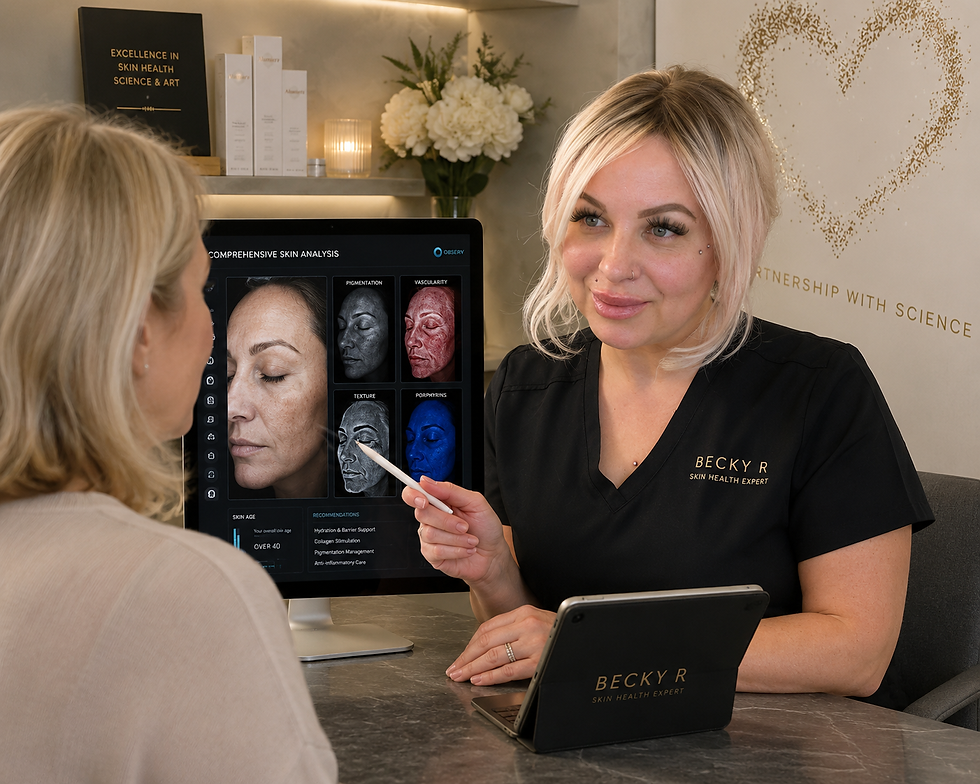
How we approach polynucleotides at No.1 Urban Aesthetics
We are a nurse-led clinic in Newcastle-under-Lyme, and the way we run this treatment reflects that.
Consultation first, always. No polynucleotide course is booked without an assessment, because the single most common outcome of that assessment is discovering the patient's actual concern would be better served by something else. Sometimes the honest answer is a skincare correction and a follow-up in twelve weeks.
Full clinical history. Medications, anticoagulation, allergies, autoimmune disease, previous treatments, previous complications, and what you are actually hoping for in your own words.
Photography. Standardised, same lighting, same angle, every time. Memory is an unreliable judge of gradual change in both directions — it will convince you nothing happened, and it will convince you something happened that did not. Photographs settle it.
Realistic counselling before consent. Including the timeline, including the possibility that you are a non-responder, and including the irreversibility point.
Treatment by a registered healthcare professional with professional indemnity, NMC registration, appropriate complication training, and immediate access to the clinic's prescribing and emergency governance when needed.
Review at the end of the course, against the photographs, with an honest conversation about whether to continue.
You can read more about our clinical governance on our standards and governance page, and about the clinical team behind No.1 Urban Aesthetics on our website.

The limits: safety, contraindications and the UK position
Safety, side effects and contraindications
Polynucleotides have, by injectable standards, a reassuring safety profile. That is not the same as no risk.
Expected effects
Injection-site redness. Swelling, typically one to three days. Small papules at injection points, usually settling within 24 to 48 hours — more visible and slower to settle if placed too superficially. Bruising. Tenderness. Occasionally transient itching or burning. Local reactions often become most apparent around 12 hours after treatment rather than immediately.
Less common
Prolonged nodules or lumps, usually related to injection depth or excessive volume in one place. Haematoma, particularly periorbitally. Infection, as with any injection. Hypersensitivity or histamine-type reactions. Reactivation of cold sores with perioral treatment in susceptible patients.
Vascular occlusion — the serious complication associated with fillers — is a very low risk given the intradermal placement, tiny aliquots and low viscosity. Very low is not zero. It is not zero for any facial injection, which is why practitioner anatomy knowledge is not optional.
Contraindications and cautions
Pregnancy and breastfeeding — no data, absolute exclusion in my practice
Significant fish or seafood allergy — see below
Active infection or inflammatory skin disease at the treatment site
Autoimmune disease, immunosuppression, or active or recent malignancy — caution, individual assessment, and often deferral. The theoretical concern is the pro-angiogenic action. There is no good data either way, which is precisely why caution rather than reassurance is the right posture
Anticoagulant or antiplatelet therapy — not an absolute bar, but a significant bruising and haematoma risk. Cannula technique, explicit warning, and never stopping prescribed medication for a cosmetic procedure
Keloid or hypertrophic scarring tendency
Bleeding disorders
Recent laser, peel or resurfacing to the area
Under-18s — cosmetic injectable procedures are not appropriate for under-18s and we do not offer them
Body dysmorphic disorder or expectations that no treatment can meet — screened for, and a reason to decline
The fish allergy question — the honest version
The industry argument goes like this: purification removes all peptide and protein content, leaving only DNA; the proteins responsible for fish allergy — parvalbumin and its relatives — are therefore absent; polynucleotides are safe in fish-allergic patients.
The chemistry of that argument is sound. What is missing is the evidence. I am not aware of published allergy-challenge studies in fish-allergic patients that test the claim clinically.
So my position, and the position I would want any practitioner treating my family to take, is this. A significant fish or shellfish allergy is a relative contraindication. We discuss it, we document it, and in most cases we choose a different treatment. I will not tell you it is safe, because nobody has demonstrated that it is.
If a clinic tells you flatly that fish allergy is not an issue, they are repeating a manufacturer's argument as though it were a clinical finding.
The irreversibility point
This one is under-discussed and genuinely important.
Hyaluronic acid fillers can be dissolved with hyaluronidase. Polynucleotides cannot. There is no reversal agent.
In practice this matters less than it sounds, because polynucleotides do not add volume — there is nothing to dissolve and no shape to correct. But it does mean that if the product is placed badly, too superficially or in the wrong plane, you wait it out rather than fixing it.
Which means practitioner selection matters more than product selection. The Joint Council for Cosmetic Practitioners makes the same point.
The UK regulatory position in 2026
Patients deserve to understand the framework they are being treated within, so here it is plainly.
What polynucleotides are, legally
Polynucleotide injectables marketed in the UK are CE-marked (and, under transitional arrangements, CE or UKCA-marked) Class III medical devices. They are not licensed medicines.
Two consequences follow.
First, they do not require a prescription, and unlike prescription-only medicines they can lawfully be advertised to the public. That is why you see them promoted openly in a way that certain other injectables are not.
Second, "MHRA approved" is not an accurate description. Device certification is not a medicines licence. If a clinic uses that phrase about polynucleotides, they have either misunderstood the regulation or they are hoping you will.
Note also that polydeoxyribonucleotide's status as a registered medicine in Italy and South Korea does not transfer to the UK. Products here are devices.
What we will not claim
The CAP Code requires efficacy claims to be substantiated before publication. Applied to polynucleotides, that rules out a long list of things you will nonetheless see online:
"MHRA approved" or "licensed"
"Clinically proven to reverse ageing"
"Repairs your DNA"
"Regenerates new skin"
"Permanent" or "results guaranteed"
"No side effects" or "risk free"
"Safe if you have a fish allergy"
"Treats" a named medical condition — alopecia, acne, rosacea, eczema, osteoarthritis. A medicinal claim made for a medical device is a problem with both the ASA and the MHRA
Percentage improvement figures that cannot be substantiated
Any suggestion that polynucleotides replace filler or botulinum toxin
We also do not use before-and-after images that are not representative, do not trivialise procedures, do not market to under-18s, do not use artificial urgency or pressure selling, and do not exploit body image insecurity. Those are all explicit requirements of the ASA's guidance on marketing cosmetic procedures, and we treat them as a floor rather than an aspiration.
The England licensing scheme
Section 180 of the Health and Care Act 2022 enables a licensing scheme for non-surgical cosmetic procedures in England. The Government published its consultation response in August 2025, adopting a risk-based red, amber and green model — green procedures open to any licensed practitioner meeting standards, amber requiring either regulated healthcare professionals independently or non-healthcare practitioners under oversight, and red restricted to qualified regulated healthcare professionals working in CQC-registered premises.
No statutory scheme is yet in force. Further consultation on implementation is expected during 2026. Where polynucleotides will sit is not yet determined — amber is the reasonable expectation, but it is not confirmed, and no clinic can currently claim to be "licensed" under a scheme that does not yet exist.
What I would say is this: a nurse-led clinic run by registered healthcare professionals with existing professional regulation, indemnity, in-house prescribing support and clinical governance is not going to find the licensing scheme difficult. Some businesses will. That tells you something worth knowing now, rather than in 2027.
Prescribing standards
Although polynucleotides themselves are not prescription-only, the NMC's guidance effective 1 June 2025 prohibits remote prescribing for elective non-surgical cosmetic procedures. A face-to-face consultation is required before prescribing injectable prescription-only medicines used in cosmetic procedures — including local anaesthetics, hyaluronidase and emergency kit medicines.
That matters for any clinic's overall safety infrastructure. In our clinic, prescription-only medicines used alongside aesthetic care are assessed and prescribed face to face by our independent prescriber within the same clinical team, rather than through detached remote prescribing.
Questions people actually ask
Questions we are actually asked
Are polynucleotides a filler?
No. They add negligible volume and are not designed to lift or contour. They target skin quality — hydration, elasticity, texture and fine lines.
Is it really made from salmon sperm?
The raw material is derived from salmon or trout gonadal tissue. What is injected is purified DNA polymer — not sperm, not tissue, not a hormone. The headline is media shorthand.
Will it change my DNA?
No. It supplies nucleotide building blocks that your cells can reuse. It cannot alter your genetic code, and anyone describing it as "DNA repair" is misusing the phrase.
Do polynucleotides actually work?
The published evidence is promising but small — nine studies covering 219 patients in a 2025 systematic review, all of low-to-moderate quality, showing improvements in wrinkles, texture and elasticity while explicitly calling for better trials. Where compared directly with hyaluronic acid, results were comparable.
How many sessions will I need?
Typically three, spaced two to four weeks apart, then maintenance at around six months.
When will I see a result?
Usually four to eight weeks after starting, continuing to improve over three to six months. Most people notice after the second or third session, not the first.
How long do results last?
Commonly around six months after a full course. Published follow-up is mostly three to six months, and one trial found measured improvements declining over time — so long-term durability is not well established.
Does it hurt?
Multiple small injections with a very fine needle. Most people find it tolerable, and topical numbing cream for 15 to 20 minutes makes it comfortable. Cannula technique reduces discomfort around the eyes.
Will I have bumps afterwards?
Yes, small raised papules at each injection point are expected. They usually settle within 24 to 48 hours. Swelling can last one to three days.
Can I go straight back to work?
Usually — but expect visible bumps, redness and possible bruising for a day or two, particularly under the eyes. Do not book it the day before an event.
Can it be dissolved if I don't like it?
No. There is no reversal agent, unlike hyaluronic acid filler. Because it does not add volume this rarely matters cosmetically, but it is a reason to prioritise practitioner choice.
Can I have it if I'm pregnant or breastfeeding?
No. There is no safety data, so we do not treat.
What if I'm allergic to fish or shellfish?
The manufacturing argument is that purification removes the allergenic proteins. That argument is chemically reasonable but has not been proven in allergy studies. We treat significant fish or seafood allergy as a reason for caution and usually recommend an alternative.
Is it safe with an autoimmune condition?
There is no good data either way. We assess individually and take a cautious approach, which sometimes means declining.
Will it fix my dark circles?
It can improve skin quality, crepiness and fine lines around the eye, which often makes the area look brighter. It will not fill a hollow tear trough or remove pigment-based or shadow-based dark circles.
Will it help my acne scars?
There is one small randomised placebo-controlled trial showing significant improvement in moderate-to-severe atrophic scars at one and three months. Encouraging but small — in practice it works best combined with resurfacing.
Does it work for hair loss?
There is early evidence of modest improvement in hair count and thickness, largely from small studies using intensive weekly protocols. It is an adjunct, not a replacement for evidence-based treatments, and a recent review highlights the gaps.
Are polynucleotides MHRA approved?
No — and the phrase is wrong. UK polynucleotide injectables are CE/UKCA-marked Class III medical devices. Device certification is not a medicines licence.
Polynucleotides or a hyaluronic acid skin booster — which should I have?
Hyaluronic acid gives faster, more obvious hydration and mild firming. Polynucleotides aim more at repair, texture and delicate areas like the under-eye. Head-to-head comparison found them broadly comparable, with polynucleotide slightly ahead on measured elasticity, hydration, roughness and pore size. It depends on your skin and your priority.
What about exosomes instead?
In the UK, injectable exosomes have no marketing authorisation and cannot lawfully be used in aesthetic procedures. Plant-derived exosomes are permitted only as topical cosmetics. Polynucleotides are a lawfully certified injectable.
Can I combine polynucleotides with microneedling, laser or filler?
Yes — and expert consensus recommends polynucleotides as priming, starting at least a month before. Do not stack them on the same day without a plan.
How do I know if a clinic is doing this properly?
Ask who is injecting and what their professional registration is. Ask how prescription medicines are assessed and prescribed when they are needed as part of aesthetic care. Ask what the clinic would do if you had a complication. Ask to see standardised before-and-after photography rather than filtered images. And notice whether they tell you what the treatment cannot do.
The takeaway
The honest verdict
Polynucleotides are a biologically coherent, well-tolerated treatment with a real and improving evidence base, aimed at a problem — skin quality — that the aesthetic industry historically addressed badly.
They are not a miracle. They are not proven superior to hyaluronic acid. They do not replace filler, they do not replace toxin, and they will not do anything for volume loss or laxity. The trial evidence is smaller than the marketing implies, and honest practitioners should say so.
But for the right patient — the one whose complaint is that their skin looks tired rather than that their face looks different — they are one of the more genuinely useful things we have added to the menu in a decade.
The determining factor is not the product. It is whether someone assessed you properly before selling you one.
More from The Urban Supplement
If you want the wider context rather than another treatment sales page, continue with perimenopause skin changes, microneedling after 35, or our piece on treatment stacking and why it is changing aesthetic medicine.
Book a consultation
If you recognised yourself in the opening paragraphs of this article — the tired-looking skin, the crepiness under the eyes, the sense that nothing is wrong exactly but nothing looks quite as it did — a consultation is the right next step. Not a treatment. A consultation.
We will assess your skin properly, tell you honestly whether polynucleotides are the right answer for what is actually bothering you, and if they are not, tell you what is.

56 Ironmarket, Newcastle-under-Lyme, Staffordshire. Serving Newcastle-under-Lyme, Stoke-on-Trent, Staffordshire, Cheshire and Market Drayton.
Find us · 01782 444086
Healthy skin. Quiet confidence. Still completely you.

About the author. Rebecca (Bex) Beckett is a Registered Nurse and Co-Director of No.1 Urban Aesthetics in Newcastle-under-Lyme. Her nursing background includes senior clinical leadership, and her approach to aesthetics is rooted in careful assessment, patient education, realistic expectations and natural-looking outcomes.
Read more about our standards and governance.
Medical disclaimer. This article is general information about a treatment and is not individual medical advice. Suitability for any aesthetic procedure can only be determined at a face-to-face consultation with a qualified practitioner. Polynucleotide injectables available in the UK are CE/UKCA-marked medical devices; they are not licensed medicines, and no claim of MHRA approval is made or implied.
References.
Lampridou S, Bassett S, Cavallini M, Christopoulos G. The Effectiveness of Polynucleotides in Esthetic Medicine: A Systematic Review. Journal of Cosmetic Dermatology 2025;24(2):e16721.
·Lee YJ et al. Comparison of the effects of polynucleotide and hyaluronic acid fillers on periocular rejuvenation: a randomized, double-blind, split-face trial. Journal of Dermatological Treatment 2022;33(1).
· Araco A, Araco F. Preliminary Prospective and Randomized Study of Highly Purified Polynucleotide vs Placebo in Treatment of Moderate to Severe Acne Scars. Aesthetic Surgery Journal 2021.
· Squadrito F et al. Pharmacological Activity and Clinical Use of PDRN. Frontiers in Pharmacology 2017;8:224.
· Kim TW et al. A randomized controlled trial comparing intraarticular polynucleotide and hyaluronic acid for knee osteoarthritis. Scientific Reports 2023;13:9419.
· Lee SH et al. Therapeutic efficacy of autologous platelet-rich plasma and polydeoxyribonucleotide on female pattern hair loss. Wound Repair and Regeneration 2015;23(1).
· Lee KWA et al. Polynucleotides in Aesthetic Medicine: A Review of Current Practices and Perceived Effectiveness. International Journal of Molecular Sciences 2024;25(15):8224.
· ASA/CAP Guidance on the marketing of surgical and non-surgical cosmetic procedures.
· House of Commons Library, The regulation of non-surgical cosmetic procedures in England, CBP-10331.
Last reviewed: August 2026. Next review due: August 2027.
