The Heat Is Here — Here's How to Stay Well This Week
- Becky Beckett

- Jun 22
- 4 min read
Updated: Jun 26

The Met Office has issued a red weather warning for extreme heat across much of England and Wales, and if you're in the Midlands, you'll feel it. Peak temperatures of 38–40°C are expected Wednesday and Thursday — and the nights aren't going to offer much relief either.
The NHS and the news will cover the alerts in full — you don't need me for that. What I want to do is give you something a bit more practical. The kind of thing I'd say to a friend sitting in front of me.

What the Warning Actually Means
A red warning doesn't mean don't move. It means plan your day around the heat and look out for the people around you.
The key window to work around is 11am to 3pm — that's when temperature and UV peak. Move anything outdoor to early morning or evening if you can. Keep cool water with you all day, and sip it before you feel thirsty. By the time thirst kicks in, your body's already slightly behind on hydration.
That's genuinely most of what you need to know.
Spotting Heat Exhaustion — Before It Gets Worse
Heat exhaustion is your body saying it's struggling. The signs are tiredness, dizziness, headache, feeling or being sick, heavy sweating, pale clammy skin, muscle cramps, and intense thirst.
If you or someone around you starts to feel this way, the response is straightforward — move somewhere cool, loosen clothing, sip water or an oral rehydration drink, and cool the skin with a damp cloth or fan. Most people feel significantly better within 30 minutes.
If they don't improve — or if you're worried at all — that's when you ring NHS 111.

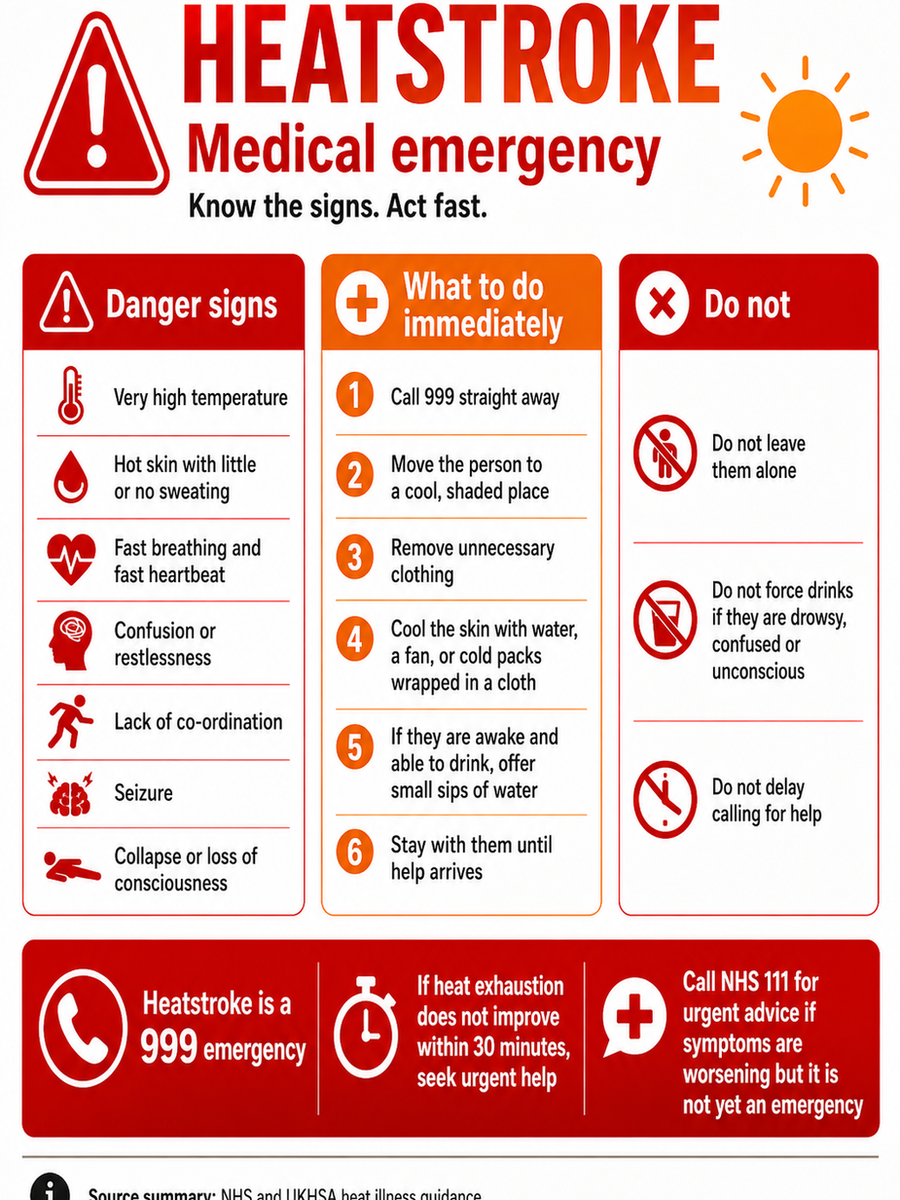
When Heatstroke Is the Concern
There's a step-up from heat exhaustion to heatstroke, and it's worth knowing the difference — not to alarm you, but because the response changes.
Heatstroke looks like a very high temperature, hot dry skin with little or no sweating, confusion, fast breathing, poor coordination, or collapse. If you see these signs, call 999, move the person to shade, and start cooling them straight away — cool water on the skin, remove excess clothing, stay with them.
Don't give fluids if they're drowsy or confused. Don't leave them alone. Help is on the way.
Hot Nights — the Bit People Underestimate
Warm, humid nights make it harder for your body to recover from the day's heat. You can wake up already depleted — which isn't ideal if you're working, caring for someone, or just want to feel like yourself.
A few things that genuinely help: keep curtains and blinds closed during the day to stop rooms holding heat. Move to the coolest room to sleep. Open windows once the outdoor temperature starts to drop. A fan works well as long as the room stays below 35°C. Light cotton bedding, a cool shower before bed, and water on the nightstand all make a real difference.
If you have elderly relatives or neighbours who live alone, a quick check-in this week is one of the most useful things you can do.

A Word About Water
When it's this warm, the pull of open water is completely understandable — rivers, reservoirs, canals, the sea all look incredibly inviting right now. But it's worth being aware of a few things before you go in.
Open water in the UK stays cold even during a heatwave — the surface can be deceptive. Cold water shock is real, it happens quickly, and it can affect even confident swimmers. If you're swimming outdoors, stick to supervised locations, stay within your depth, and never jump into open water you don't know.
For children: paddling pools are brilliant, but never leave young children unsupervised near any amount of standing water — even shallow. Drowning is silent and can happen very fast. Eyes on children around water, always.
The RNLI and the Royal Life Saving Society both have excellent guidance on open water safety if you'd like to read more.
Don't Forget Your Dog
Your dog can't tell you they're overheating — so you have to watch for them. The five-second pavement test is the easiest way to check: hold the back of your hand on the pavement for five seconds. If it's uncomfortable for you, it will hurt their paws.

Walk early or late. Keep cool water constantly available. And please — never leave them in a car, even briefly, even with windows open. At 22°C outside, a car interior can reach 47°C. It doesn't take long.
Signs of canine heatstroke include heavy panting, excessive drooling, lethargy, and vomiting. If you're concerned, cool them down straight away and call your vet.
The Short Version
Stay cool. Drink water. Look out for each other — and for your pets. Let the people around you know you're thinking of them. Sometimes that's the most useful thing of all.
Avoid being outdoors between 11am and 3pm where you can.
Drink water regularly — before you're thirsty.
Check in on elderly relatives, neighbours, and anyone living alone.
Be cautious around open water — cold water shock is a real risk even in hot weather.
Keep children supervised near any water, however shallow.
Walk dogs early or late, and never leave them in a vehicle.
For urgent advice: NHS 111. For an emergency: 999.
Stay well this week.
— Bex
No.1 Urban Aesthetics is a nurse-led clinic based in Newcastle-under-Lyme. We care about the health of our community — and sometimes that just means sharing the things worth knowing.
Ready to book a consultation?
No.1 Urban Aesthetics — nurse-led clinic in Newcastle-under-Lyme. Delivered by Rebecca Beckett RN, Advanced Nurse Practitioner.
Call: 01782 444086 • WhatsApp: Message us • Book a consultation online
