The Art of Almost Nothing: What Natural Lip Filler Actually Looks Like in 2026
- Becky Beckett

- May 12
- 24 min read
Updated: Jun 26
By Rebecca Beckett, Co-Director & Lead Injector, No.1 Urban Aesthetics

She's Still in the Car
She's been sitting outside the clinic for eleven minutes.
She knows this because she's checked her phone five times, reapplied her lip balm twice more than necessary, and drafted and deleted a cancellation message — twice.
She’s wearing her good jeans — the ones that make her feel quietly pulled together — and a cashmere jumper in that impossible shade of camel that somehow makes every woman look more composed than she feels. Her nails are done. She’s wearing the perfume reserved for interviews, anniversaries, difficult conversations. The perfume for courage.
The message said something like so sorry, something's come up, because that's the polite British thing to say when what you actually mean is: I am terrified.
Not terrified of the needle, exactly. Terrified of something harder to name.
Terrified of walking out looking like someone else. Terrified of becoming a before-and-after photograph on a stranger's Instagram page. Terrified of the comment her sister might make, or the colleague who notices and says nothing but looks. Terrified of that specific modern horror: the overfilled lip. The shelf. The pillow mouth. The face that no longer quite matches the person inside it.
She is not shallow. This is important. She is, in fact, deeply thoughtful — about her face, about what she wants, about what she doesn't want. She has done her research. She has zoomed in on clinic photographs until her eyes ached. She has watched videos and immediately closed them. She has saved the booking three weeks ago and worried about it, quietly, in the background of ordinary life.
And now she's here. Parked. Reconsidering.
I know her. I know her because she is, more often than not, my favourite kind of client. Because the women who sit in their cars outside aesthetics clinics are not impulsive. They are careful. They are the women who, once they trust you, trust you completely — and who leave looking so quietly, perfectly themselves that they cannot quite believe it was filler at all.
To that woman: you don't need to arrive confident. That is my job.
You just need to get out of the car.

The Problem With Modern Natural Lip Filler (And Why We've All Seen Too Much of the Wrong Kind)
Let's be honest about what happened.
Somewhere around 2015, lip filler stopped being a subtle clinical tool and became a social media aesthetic. It became a look. A statement. A specific silhouette that had almost nothing to do with the individual face it was placed upon — and everything to do with the algorithm, the trend cycle, and what was performing well on Instagram that particular quarter.
You know the look. The upper lip that juts forward with architectural certainty. The border overfilled to the point of shadow. The philtrum — that beautiful little groove between nose and lip — stretched flat. The face that reads, even in photographs, as somehow taut. Somehow done. The lips that arrive before the person does.
The irony is that this look, in real life, rarely resembles the photographs used to sell it. Social media distorts. Angles flatten. Filters smooth. The lip that photographs as "full and glossy" in a curated selfie can read, in person, under daylight, at the dinner table, as something closer to "uncomfortable." Overprojected. Stiff. Ageing, paradoxically — because movement is youth, and stiffness is the opposite of both.
The injector who created that look was not, in most cases, incompetent. They were responding to demand. Clients brought in photographs. Clients asked for more. And some injectors — driven by aesthetic ego, or by the simple market logic that more filler equals more income — gave more. And then more again.
The result was a generation of lips that migrated. That blurred. That spread sideways across the face in that unmistakable way, the filler finding its own level, pooling beyond the vermillion border in a kind of horizontal creep that no amount of good photography could disguise. Social media made this look aspirational for a while. Real life was less forgiving.
This is not inevitable. This is not what filler does when it is placed carefully, by someone who understands anatomy, who respects restraint, and who has a strong enough clinical opinion to say — gently, warmly, but clearly — no, I don't think that's what your face needs.
I have that opinion. I use it often.
What the face usually needs is almost nothing. A little. A refinement. Something so considered that people cannot place it — they just think you look well, or rested, or like yourself but somehow more so.
That is what I am interested in.

The Anatomy of Restraint: How I Approach Lip Filler Differently
There is a particular kind of confidence that comes from knowing when to stop.
It is, in my experience, the most undervalued skill in aesthetic medicine.
Anyone can inject. The syringe goes in, the product goes in, the lip gets bigger. What takes genuine clinical experience — and a certain stubbornness — is the ability to look at a face and understand what it is actually asking for, rather than what a trend suggests it should have.
Lips do not exist in isolation. They are part of a face. They sit in relationship to the nose, the chin, the philtrum columns, the oral commissures, the surrounding skin. They have their own anatomy — the Cupid's bow, the vermillion border, the body of the lip, the tubercles, the white roll — and each of these structures responds differently to product. Each needs to be considered individually, and then considered again in the context of the whole.
When I sit with a client during consultation, I am not looking at their lips. I am looking at their face. I am looking at proportion. I am looking at the profile — because the profile is where overfilled lips betray themselves most ruthlessly. I am thinking about movement. About how this person smiles, and whether the treatment will honour that smile or interfere with it.
I am also listening. Because the consultation is not a sales process. It is a conversation. And what clients say in that conversation — particularly about fear, about what they don't want, about the photograph they saw of someone whose lips they would never want — tells me everything I need to know about how to proceed.
The treatment itself is slow.
Deliberately, unhurriedly slow.
I inject with precision. I use fine cannulas where appropriate, which allow placement with less trauma to the tissue — less bruising, more comfort, a softer final result. I use sharp needles for specific structural points where exactness is paramount. I pause often. I look. I ask. I invite the client to take a breath.
Advanced anatomical knowledge is not optional in this work — it is the foundation of everything. Understanding where the labial arteries run, understanding the depth at which different products behave differently, understanding how tissue in a mature client responds differently to tissue in a younger one: this is the knowledge that separates a genuinely safe treatment from one that simply looks fine in the immediate aftermath.
I want to say something clearly about pain, because it comes up in every consultation.
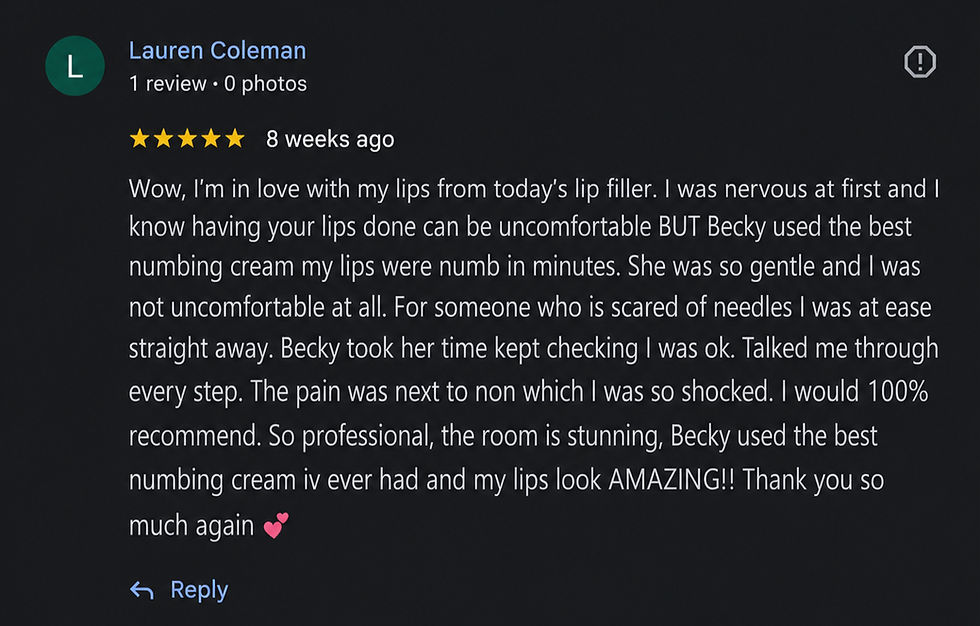
I will not tell you lip filler is painless. That would be dishonest, and I find dishonesty from clinics around this particular subject rather exhausting. I will tell you this: in my treatment room, the experience is designed to minimise discomfort at every stage. Premium topical numbing is applied properly — meaning for the full recommended time, not a perfunctory five minutes before we begin. I use products containing lidocaine, which numbs from within as the treatment progresses. I take my time. I don't rush through injecting because rushing increases trauma and trauma increases discomfort.
Most clients, particularly those who were most frightened beforehand, finish their treatment and say some version of: that was nothing like I expected. Not nothing. But manageable. Surprisingly manageable. Far gentler than their imagination had prepared them for.
Experienced injectors tend to produce less discomfort, not more. The technique matters enormously. Confidence in placement means fewer passes, less tissue disruption, and a calmer overall experience for the client lying in front of you.
Nervous clients are not more difficult. They are — with the right environment, the right pace, the right conversation — often the easiest to treat. Because they are paying attention. Because they trust carefully and, once they do, completely.


Lumi-Pro and Lumi-Fil Kiss: The Quiet Luxury of Modern Filler

Not all fillers are the same. This sounds obvious, but it is a fact that gets lost in a great deal of beauty content — where "lip filler" is treated as a single entity, a homogeneous product, as if every syringe contains the same substance and produces the same result.
They do not. And the product chosen makes a significant difference — not only to the result, but to the feel of the lips, the duration of the treatment, the behaviour of the filler over time, and the subtle but important quality of movement.
I use Lumi-Fil and Lumi-Lips, and I want to tell you about them properly — not in brochure language, but in the way I would talk about them to a client who has just asked why this product specifically?
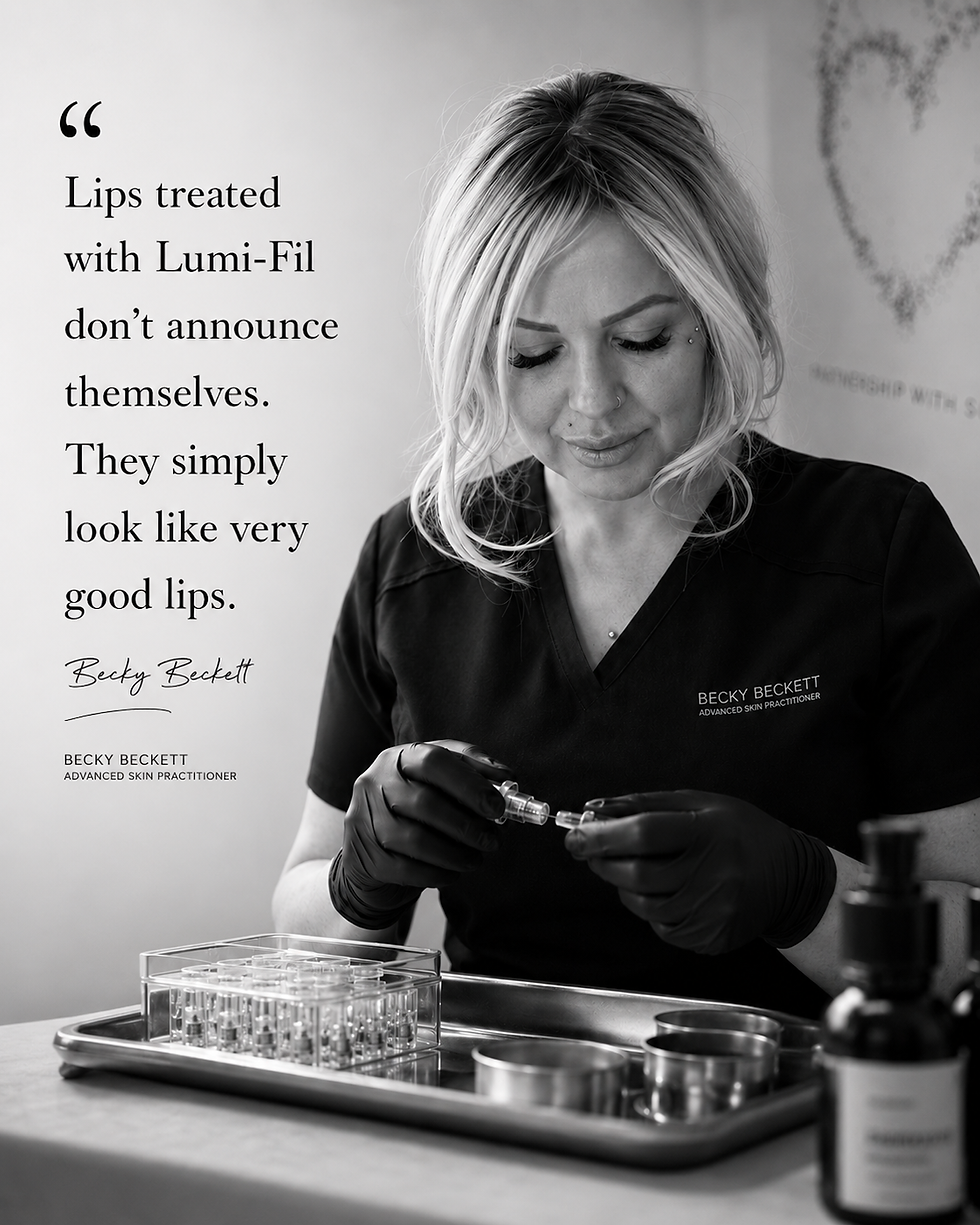
Lumi-Fil is a remarkably refined hyaluronic acid filler. It is soft. Not just in texture, but in the way it integrates with lip tissue — it doesn't sit in the lip so much as it becomes part of it. The result is a lip that moves naturally, that responds to expression, that doesn't feel foreign when you press your lips together or smile or bite into something. The hydration it delivers is exceptional: lips treated with Lumi-Fil have a quality of luminosity that comes from genuine moisture in the tissue rather than from surface gloss or the visual tricks of overprojection.
Hydration matters more than volume in most lip treatments. This is something I believe very firmly. A dry lip, a thin lip, a lip that has lost its internal moisture through age or sun exposure — that lip does not need to be bigger. It needs to be replenished. Lumi-Fil does this beautifully, restoring a plumpness that reads as health rather than procedure.
Lumi-Lips takes this further, offering a slightly more structured formulation that allows for precise architectural work — the definition of the vermillion border, the enhancement of the Cupid's bow, the careful restoration of lip shape that has softened with time. It is the product I reach for when a client wants refinement of form: not just hydration, but shape. Not just moisture, but a quiet elegance of structure.
Together, these two products allow me to create what I think of as the complete lip treatment: hydration and definition in balance, softness with enough structure to catch the light.
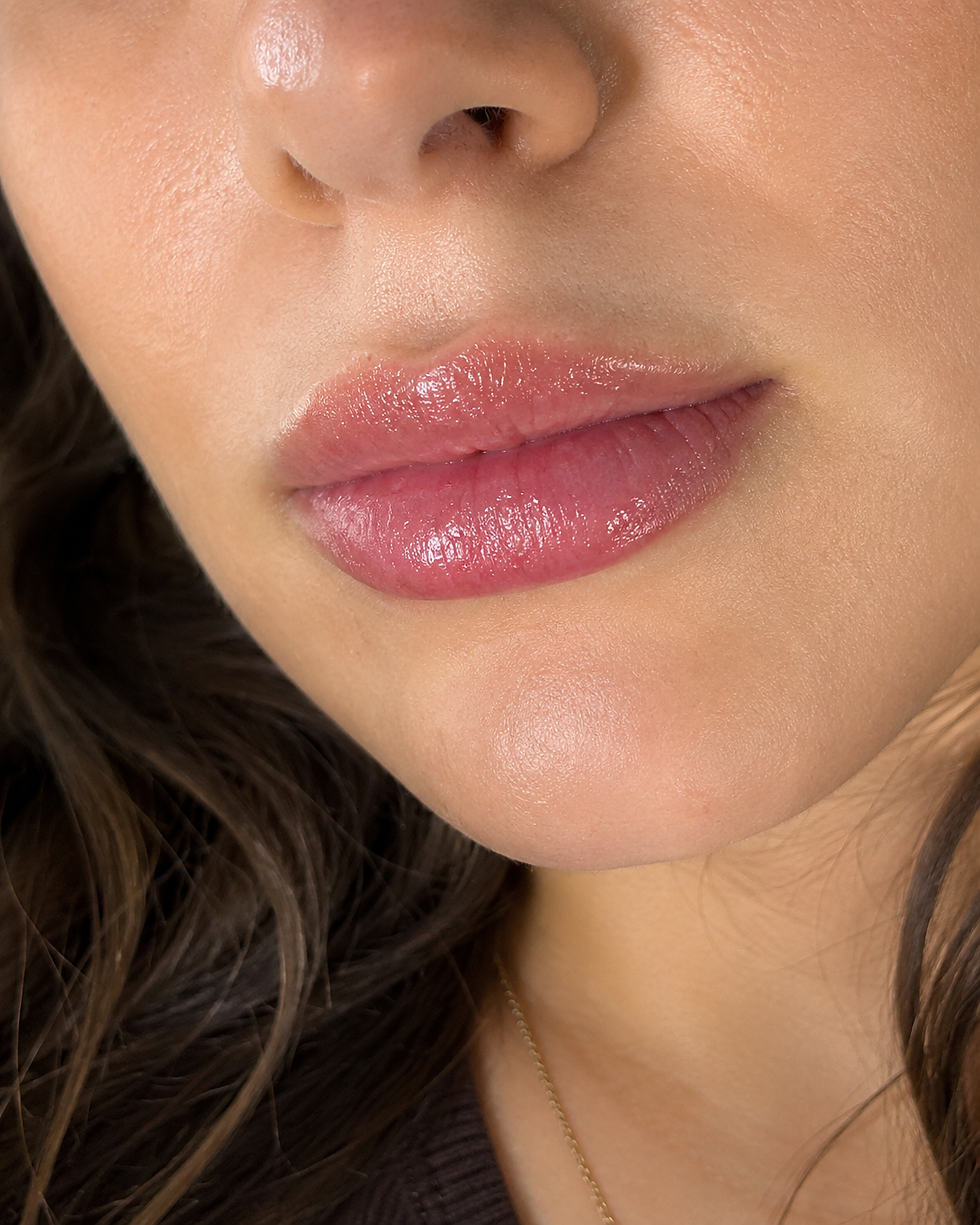
There is a particular aesthetic I am drawn to — and that clients who come to me are usually drawn to as well. It is inspired, loosely, by the Russian Doll technique: a method of layering product that builds volume through shape rather than sheer quantity. The Russian Doll approach gives the lip a natural shelf, a gentle central projection that creates dimension without the forward jutting that characterises overfilled work. The upper lip is given its curve.
The Cupid's bow is respected, deepened subtly, restored to its natural prominence. The profile — critically — looks like a real lip in profile. Soft. Natural. Slightly full. Wholly believable.
This approach works because it builds from the inside out, using anatomy as a blueprint. The structure of the lip is followed, not overridden. The result is a lip that looks, to any observer, like a particularly fortunate genetic outcome.
What I want to avoid — and this is a strong clinical opinion held with real conviction — is any filler that behaves as a rigid mass. Overly stiff products create a lip that looks convincingly full in a still photograph and reads, in motion, as something slightly wrong. The face moves constantly. Under restaurant lighting. In office mirrors. Across breakfast tables. In all the small, ordinary moments where filler has nowhere to hide. It moves when we speak, when we laugh, when we chew, when we make the tiny micro-expressions of ordinary social engagement. A stiff lip interrupts this movement. It reads as static in a world of motion. And, paradoxically, it ages the face — because youth is elasticity, and rigid filler is the opposite of that.
Softness photographs beautifully, too. The dreaded "flat lip" selfie that some clients fear — where lips catch no light, appear thin in photographs — is actually best corrected not through volume but through hydration and the careful placement of definition along the border. A well-hydrated, softly structured lip catches light across its surface in a way that makes it appear full even in an unfiltered photograph, without a millilitre of unnecessary product.
The Lumi products achieve this. They are, in the most precise sense of the phrase, quietly luxurious. They do not announce themselves. They simply make the lips look like very good lips — softer, more hydrated, more alive somehow. The sort of lips that make people assume you drink more water, sleep properly, and have your life together.

Your First Appointment: What Actually Happens
I want to walk you through it. Not in the vague reassuring language that aesthetics clinics sometimes use — you'll feel so welcome, it's a lovely experience — but specifically. Because specific is reassuring. Vague is where fear lives.
Arriving
The clinic is calm. It is not a medical ward. It does not smell of antiseptic or feature overhead fluorescent lighting and a row of plastic chairs. The sort of environment that lowers your shoulders before anybody says a word. The kind of calm that feels increasingly rare now everything else seems designed to overstimulate you.
You will be offered a drink. You will not be made to wait longer than necessary. If you're nervous — and you may well be, and that is entirely fine — you will not need to pretend otherwise.
Consultation
This is the part that matters most. We sit together, often before you're even in the treatment chair, and we talk. I ask what you're hoping for. I ask what you're afraid of. I look at your face — not as a set of problems to correct, but as a face. Your face. With its own particular proportions and character that I have no interest in overriding.
I will tell you honestly what I think filler can and cannot achieve for you. I will discuss volume: whether you need it, how much might be appropriate, how I would place it. I will show you photographs of work I've done that I think is relevant to your anatomy. I will not pressure you into a larger amount than I believe is appropriate. Sometimes the honest clinical answer is: less than you think you want. Less, done well, is almost always better than more.
Discussing Fear
Clients apologise for being nervous. Please don't. Fear before a first aesthetic treatment is the appropriate response. It means you're taking it seriously. What I need from you is not confidence — it is honesty. Tell me what you're scared of. Tell me about the photograph you saw that made you cancel your last appointment. Tell me about the friend who had filler that went wrong. I can only work well with that information.
The Numbing
Topical anaesthetic is applied and left to work properly. This takes time. We use that time to continue the consultation, to look at references, to finalise the plan. When I say the numbing has been left on long enough, I mean it literally: I will not begin until it has worked.
The Treatment
You will be reclined in the chair. I will check your comfort regularly. I will tell you what I am doing and why. If at any point you want me to stop, I stop.
The treatment — depending on the complexity of what we've agreed — takes between fifteen and forty-five minutes. You will feel pressure. You may feel a faint sting at certain points. You will not, in most cases, find it intolerable. Most clients are surprised. Pleasantly.
Swelling
This is important: your lips will be swollen immediately after treatment. Often significantly. This is normal. This is not your result.
The swelling peaks around 24–48 hours and then resolves over the following week to ten days. The final result — what your lips will actually look like, settled, soft, and integrated — is not visible until two weeks post-treatment. Please do not judge your results in the immediate aftermath. The mirror on the day of treatment is not showing you the truth.
Aftercare
I will give you clear written aftercare instructions. The key principles: avoid intense heat (saunas, very hot showers, vigorous exercise) for 24–48 hours. Do not press or massage the lips. Stay hydrated. Sleep on your back if possible for the first night. Avoid alcohol the same day.
The Review
I offer review appointments to all clients. If something has healed asymmetrically, if you want slightly more volume in one area, if you have any concern at all — we see you. Aesthetic treatment is not a transaction that ends when you leave the clinic. It is a relationship.
You are allowed to start small.
0.5ml is a complete, valid treatment. It is not a "taster." It is not a compromise. For many clients — particularly those with naturally good lip shape who want refinement rather than volume — 0.5ml is precisely right. I will never suggest you need more product than I genuinely believe would benefit you.
Why Natural Is the Hardest Thing to Create
Here is something that surprises many clients when I tell them: natural results are significantly more difficult to achieve than dramatic ones.
Volume is easy. Anyone can inject enough product into a lip to make it bigger. The size will be visible. The transformation will be undeniable. Whether it looks right — whether it looks like it belongs to the face it's on — is an entirely different matter.
The natural result requires a different kind of thinking. It requires the injector to identify what the individual face actually needs, rather than applying a formula. It requires understanding proportion — the ratio of upper to lower lip, the relationship between lip volume and the surrounding structures, the profile balance between nose, lips, and chin. It requires knowing when to stop, which is often before the client thinks they want you to.
Good proportion is more forgiving than absolute symmetry. Faces are not symmetrical — they never have been — and the attempt to create perfect symmetry in a lip is often the first sign that something has gone wrong. Natural faces have natural variation. Natural lips have natural variation. The goal is harmony, not correction.
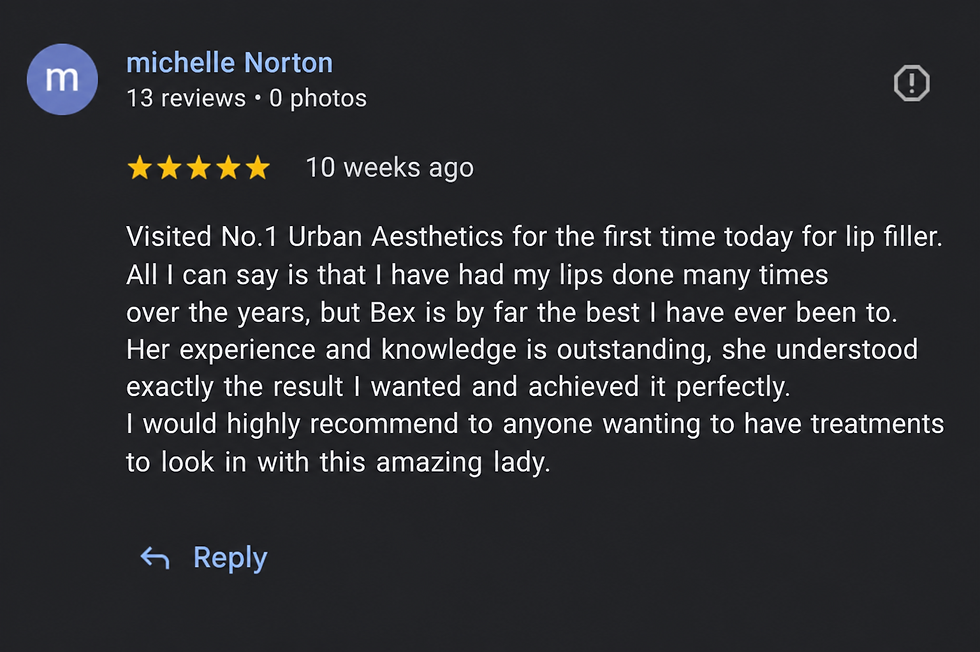
The clients who are most pleased with their results — in my experience — are rarely the ones who asked for the most dramatic change. They are the clients who said I want to look like myself, just a bit more and who trusted me enough to deliver exactly that.
Bad filler is usually obvious because too much was done too quickly. A face changes slowly when it is treated well. The people around you don't notice. You just look slightly better, slightly more rested, slightly more like yourself on a good day. That is the goal. That is what I am building toward.
Movement, as I mentioned earlier, is everything. Lips in repose look one way. Lips in conversation, in laughter, in the full expressiveness of ordinary life look quite another. The best lip filler is invisible in all of these contexts. It does not interfere with the micro-movements of speech. It does not create a static quality that reads, in motion, as something not-quite-right.
There is also the question of age. A treatment that looks beautiful at thirty may not be appropriate at fifty. A mature face benefits from a different approach — more nuanced, more focused on structure and hydration than on volume. More focused on elegance than quantity. The injector who gives the same treatment to every client, regardless of age, anatomy, or individual character, is not paying attention.

I have seen, over the years, what happens when restraint is absent. I have corrected filler that migrated because too much product was placed too superficially. I have dissolved treatments that had left clients looking, not worse than before, but somehow unfamiliar to themselves — and watched the relief on their faces when their own lips returned.
What I am protecting, in every treatment, is the face in front of me. Its character. Its individuality. The way it looks when it laughs.
Beautiful lips should belong to the face they're on. That is not a complicated philosophy. It is just the one I work by.
For Those Who Have Been Here Before: Mature Clients and the Art of Restoration
Lip filler is not only for the young. This is something that needs to be said clearly, because a great deal of aesthetic marketing targets a specific demographic and leaves many women in their forties, fifties, and sixties feeling as though the conversation is not for them.
It is for them. Emphatically.
What happens to the lips with age is both predictable and, with the right treatment, addressable. Hyaluronic acid — the substance that keeps tissue plump and hydrated — depletes gradually from the third decade of life. Volume is lost. The vermillion border, that delicate defined edge between lip and skin, softens and blurs. The philtrum columns — the two ridges above the upper lip — flatten. The lips themselves can appear to thin, even invert slightly, turning inward in a way that changes the entire lower third of the face.
Lipstick begins to bleed. This is not, as is sometimes thought, a lipstick problem. It is a structure problem. When the border of the lip has lost its definition, there is nothing to contain the pigment. Restoring that border — gently, precisely, with a product like Lumi-Lips that provides definition without excessive volume — can transform the way lipstick wears.
Mature clients benefit enormously from a hydration-focused approach. The goal is rarely volume for its own sake. It is the restoration of what was there before: moisture, softness, a gentle presence.
The return of a lip that looks alive again — softly defined, hydrated, present in the face without dominating it.
I am very deliberate with mature clients about the amount of product I use. Less is more dramatically true in this demographic. A mature face treated with restraint looks refreshed. The same face treated with too much volume can look, paradoxically, older — because the volume draws attention to surrounding skin in a way that younger tissue does not.
What mature clients often describe, once the treatment has settled, is not that they look younger. They describe looking like themselves again. Rested. Revived. The specific quality of looking like yourself, rather than looking treated, is what I am working toward in every case — and it is particularly meaningful for clients who have watched the face they know change gradually over the years.
You are welcome here. Your concerns are valid. Your result, done with care, can be genuinely beautiful.
The Psychology of the Decision
There is a conversation happening in beauty culture right now about the ethics of aesthetics. About whether choosing cosmetic treatment is a capitulation to external pressure, a betrayal of feminist principle, or a straightforward exercise in personal autonomy. It is a conversation worth having, even if it makes some people uncomfortable.
I have my own view. It is not particularly radical.
I think women — and men — have always modified their appearance. They have always used clothing, and jewellery, and cosmetics, and perfume, and haircuts as a form of self-expression and self-presentation. The impulse to present oneself well is not shallow. It is human. And the extension of that impulse into aesthetic medicine is not categorically different from any other beauty decision, except in its permanence and its potential for getting things wrong.
What I object to is the idea that aesthetic treatment should be pursued to please someone else. Or to conform to a trend. Or because you feel you cannot leave the house without it. Those are different motivations, and they lead to different decisions — and sometimes to the wrong decisions.
The clients I feel most confident helping are the ones who come with a clear, grounded sense of what they want and why. Who say: I look tired all the time and I don't feel tired. I want my face to reflect how I actually feel. Or: My lips have always been thin and I've always been self-conscious about it. I just want a little more. These are legitimate, considered, personal reasons.
The guilt that surrounds aesthetic treatment — and there is a great deal of it, particularly in British culture, where any form of self-improvement carries faint echoes of vanity — is something I encounter regularly. Clients whisper. They say I know it's silly. They look sideways when they explain their reasons, as if they expect me to agree that it's silly.
I don't. Wanting to feel confident in your own face is not silly. Seeking a small, careful refinement that makes the mirror a more comfortable place is not shallow. Choosing to do something for yourself — quietly, without announcement, with results no one will necessarily notice — is, in my view, one of the more private and personal things a woman can do.
You do not need to justify it to anyone. Including yourself.

What I ask of clients — and what I hope to offer in return — is honesty. Honesty about what you want. Honesty about what you're afraid of. And from me: honesty about what I think will actually help, and the occasional honest opinion that something else might serve you better than the treatment you came in asking for.
That conversation, that exchange of trust, is what I enjoy most about this work. Not the injection itself — the work before it, and the work after it. The knowing someone has left the clinic feeling a quiet, particular confidence that has nothing to do with looking dramatically different.
The Invitation
For anyone still sitting in the car, debating whether to walk through the door—this is the sign. The fear is normal. The hesitation is human. But inside, there’s a nurse who understands both the science and the soul of beauty.
No.1 Urban Aesthetics
GlitterbelsHQ, Staffordshire
Specialising in natural, nearly painless lip filler for nervous first-timers.

Discover Lumi-Lips artistry with Rebecca Beckett.
Subtle. Elegant. Unmistakably you.
Book a consultation: www.no1-urbanaesthetics.co.uk
Keywords: lip filler Stoke-on-Trent, lip filler Newcastle-under-Lyme, natural lip filler Staffordshire, nervous first-time lip filler, Lumi-Lips, Russian Doll lips, nearly painless lip filler
Frequently Asked Questions
Because you deserve real answers, not reassuring vagueness.
Does lip filler hurt?
This is the question I get most often, and it deserves an honest answer rather than the reflexive "it's nothing!" that some clinics offer.
You will feel something. Whether that something constitutes "pain" is genuinely subjective and varies considerably between individuals. What I can tell you is that in my treatment room, every step is taken to minimise discomfort: premium topical numbing is applied and given adequate time to work, I use products containing lidocaine which provide additional comfort from within during the injection, and my technique is slow and precise — fewer passes, less tissue disruption, less discomfort overall.
Most clients describe the experience as "surprising" — surprising because it was so much more manageable than they had expected. Some find certain areas more sensitive than others. The very centre of the upper lip tends to be the most sensitive point. These moments are brief.
The level of experience of your injector makes a real difference here. Hesitant or rushed technique increases trauma; confident, unhurried technique minimises it.
How long does swelling last?
Your lips will be swollen immediately after treatment. Often visibly, sometimes significantly. This is entirely normal and is not your result.
Swelling typically peaks at around 24–48 hours after treatment and then begins to resolve. Most clients see the swelling substantially reduced within a week. The final, settled result is not visible until approximately two weeks post-treatment.
I strongly recommend not making any judgements about your result until the two-week mark. The mirror on the day of treatment, or even a few days after, is not an accurate reflection of what your lips will look like once the tissue has settled and integrated with the product.
Can I start with 0.5ml?
Yes. Absolutely yes. 0.5ml is not a sample, a starter pack, or a warm-up. For many clients, particularly those with naturally reasonable lip volume who want refinement rather than transformation, 0.5ml is the entire treatment. It is a complete and considered amount of product.
I will never suggest you need more than I genuinely believe would benefit you. If 0.5ml achieves the result, 0.5ml is what I will recommend. Starting conservatively is always, in my view, the correct approach — particularly for first-time clients. You can add. You cannot immediately undo.
Will I look fake?
If "fake" means a lip that reads, to any observer, as treated — no, that is not what I do. The philosophy of my practice is natural enhancement: the result should be indistinguishable from a very good genetic outcome. Friends should comment that you look well. Not that you've had something done.
Whether any result looks "fake" depends almost entirely on how much product is used and how it is placed. Conservative, anatomically respectful treatment does not produce fake-looking results. Excessive product, poorly placed, does.
I have strong clinical opinions about what is appropriate for each face. I will share them with you.
What if I'm nervous?
Being nervous is fine. It is normal. It is — honestly — one of the more reasonable responses to having a needle near your face.
You don't need to pretend otherwise. Tell me. Tell me at booking, in the consultation, in the chair. I adjust my pace and my communication to suit the individual in front of me. I will not rush. I will not minimise your concern. I will explain every step before I take it.
Nervous clients, treated with the right care and pace, often have the best experiences — because the contrast between what they feared and what actually happened is so striking.
What if I hate them?
Hyaluronic acid filler is reversible. This is one of its most significant safety advantages and one of the most important things to understand before treatment.
If you are deeply unhappy with your result — if something has healed unexpectedly or you simply don't feel like yourself — the filler can be dissolved using hyaluronidase, an enzyme that breaks down hyaluronic acid. The process is straightforward. The lips return to their natural state relatively quickly.
I offer this as information, not as reassurance that something is likely to go wrong. In my practice, with careful planning and conservative approach, clients rarely want to dissolve. But knowing dissolution is an option genuinely helps clients feel safer in making the decision to proceed.
Can filler be dissolved?
Yes. Hyaluronic acid fillers — including Lumi-Fil and Lumi-Lips — can be dissolved with hyaluronidase. This is an enzyme that breaks down hyaluronic acid, and it works quickly and effectively.
This is one of the key reasons I use only HA-based fillers. The reversibility is not a footnote — it is a fundamental safety consideration. Permanent or semi-permanent fillers do not have this option. I do not use them.
Is Lumi-Fil safe?
Yes. Lumi-Fil is a hyaluronic acid filler — the same class of product that has been used in aesthetic medicine for decades and has an excellent safety profile when used by a qualified injector.
All aesthetic treatments carry potential risks, and I will discuss these honestly with you during consultation. In the hands of a qualified, experienced nurse injector who understands anatomy and uses appropriate technique, the risks of HA filler are well understood and manageable.
I am a nurse with specific training in advanced facial aesthetics. I hold full indemnity insurance. I work within the regulatory frameworks that govern medical aesthetic practice in the UK. Your safety is not an afterthought.
Why do some fillers migrate?
Migration — where filler spreads beyond the intended area, typically above the upper lip or sideways from the lip border — happens for several reasons.
The most common is volume. The more product that is placed in the lip, the more pressure there is on the surrounding tissue. Filler will, over time, move toward the path of least resistance. This is not necessarily the injector's fault, but it is often the result of too much product accumulated over repeated treatments without dissolution of previous filler.
Placement depth also matters. Filler placed too superficially is more likely to migrate than filler placed appropriately within the lip tissue.
The best prevention is restraint: not accumulating excessive product over time, and being willing — as both client and injector — to dissolve previous filler before adding more.
If you have had previous filler elsewhere and are concerned about migration, I am happy to assess and discuss options at consultation.
How long do Lumi-Lips last?
Results vary between individuals, based on factors including metabolism, the specific area treated, and lifestyle. As a general guide, clients can expect Lumi-Lips results to last between nine and fourteen months.
Lips tend to metabolise filler slightly faster than other areas of the face, because of the constant movement of the tissue. Some clients find results last closer to six months; others find they are still largely intact at a year.
Maintaining results with a top-up treatment before the product has completely dissolved tends to be more effective and more economical than waiting until the filler has gone entirely and starting again.
Are Russian Doll lips suitable for everyone?
The Russian Doll technique — a layering approach that creates natural projection and volume through shape rather than sheer product quantity — is versatile and works well across a range of anatomies. However, "suitable for everyone" is not a phrase I would use about any single technique.
Whether this approach is right for you depends on your anatomy, the condition and structure of your current lips, your age, and what you are hoping to achieve. During consultation, I will assess your individual anatomy and discuss whether the Russian Doll approach is the right framework for your treatment, or whether a different approach would serve you better.
The name, incidentally, refers to the layering philosophy — building structure from the inside out, like nested shapes — rather than producing any specific "look." The result should look like your lips, refined.
Can mature women have filler?
Not only can they — they often achieve some of the most quietly beautiful results.
The priorities are different for a mature client: less focused on volume, more focused on hydration, structure, and the restoration of definition. The vermillion border, which softens with age, responds beautifully to careful treatment. Lipstick bleed — a source of frustration for many clients in their forties and fifties — can be dramatically improved by restoring lip definition.
The amount of product used should be considered carefully for older clients. Less is more, almost universally, in mature lips. The goal is restoration, not transformation. Looking like a younger, more refreshed version of yourself — not like someone else entirely.
What if I've had bad filler before?
You are not unusual, and you are not a lost cause. I see clients regularly who have had previous filler — either that has migrated, or that was placed in a way that doesn't suit their anatomy, or that has simply accumulated to a point where the result no longer looks natural.
The first step is assessment. In some cases, dissolution of previous filler before any new treatment is the right approach — it gives us a clean canvas and makes it much easier to achieve the result you're actually looking for. In other cases, correction can be achieved with careful additional placement.
I will be honest with you about what I think is possible and what approach I recommend. If dissolution is needed first, I will say so. There is no judgement here about how you got to this point. The question is only: what do we do now?
Keywords: lip filler Stoke-on-Trent, lip filler Newcastle-under-Lyme, natural lip filler Staffordshire, nervous first-time lip filler, Lumi-Lips, Russian Doll lips, nearly painless lip filler

A Final Word
There is a particular kind of quiet that settles over a client when they have just had their first look at a result they love. It is not the exclamation of someone who has been dramatically transformed. It is something smaller and more personal than that. A stillness. A recognition.
A sense of — yes. That's it. That's what I meant.
That moment is what I am working toward. Always.
You do not need to become somebody else to feel beautiful. You do not need to arrive at your first consultation with confidence you don't have, or certainty about what you want, or the ability to look at your own face without criticism.
You need only to arrive.
We offer free consultations at No.1 Urban Aesthetics because we believe that the relationship between client and injector begins before the treatment, not on the day. We want you to feel informed. We want you to feel heard. We want you to understand your options, and your anatomy, and what is genuinely possible — so that any decision you make is a considered one.
We are a nurse-led clinic. We are based in Newcastle-under-Lyme, serving clients across Stoke-on-Trent and the wider Staffordshire area. We believe in natural enhancement. We believe in restraint. We believe in the quiet, particular confidence that comes from looking like yourself — on a very good day.
When you're ready, we'll be here.
No.1 Urban Aesthetics | Newcastle-under-Lyme | Serving Stoke-on-Trent & Staffordshire
Rebecca Beckett, Co-Director & Lead Injector | RGN | Advanced Aesthetic Practitioner
Ready to book a consultation?
No.1 Urban Aesthetics — nurse-led clinic in Newcastle-under-Lyme. Delivered by Rebecca Beckett RN, Advanced Nurse Practitioner.
Call: 01782 444086 • WhatsApp: Message us • Book a consultation online

