PDRN (Polynucleotides) vs Profhilo vs Sculptra

Updated: Sep 7
Three Injectables, Three Very Different Jobs.

PDRN is having its moment. Profhilo® has been around long enough to become one of the best-known injectable skin treatments in Britain. And Sculptra® — hardly a new treatment — is suddenly being discussed as though somebody discovered collagen last Thursday.
All three are now being drawn into the same conversation about skin quality, biostimulation, regenerative aesthetics and ageing without looking “done”.
That comparison is useful, but only up to a point.
These are not three versions of the same treatment.
PDRN and injectable polynucleotides are DNA-derived materials being explored for their effects on skin quality and tissue repair. Profhilo is based on stabilised hybrid complexes of high- and low-molecular-weight hyaluronic acid. Sculptra contains poly-L-lactic acid, or PLLA, and works through a longer-term tissue response that includes new collagen formation.
Different materials. Different behaviour. Different objectives.
And that matters far more than whichever treatment name happens to be trending this week.

The first mistake in this whole conversation is assuming that “better skin” means the same thing to everyone.
For one person, the concern may be dehydration and a loss of bounce. For another, it is fine, crepey skin around the eyes. Someone else may be noticing broader laxity, facial flattening or a gradual loss of support through the mid-face.
These are not simply different descriptions of the same problem. They reflect different biological and anatomical changes.
Skin ageing involves collagen, elastin, hydration, the extracellular matrix, fat, ligaments and bone. Sun exposure, smoking, hormones, genetics and skincare then join in, because apparently ageing needed extra admin.
An injectable aimed primarily at hydration is not automatically the answer to structural volume loss. A collagen biostimulator is not automatically the right choice for delicate peri-orbital skin. And a treatment marketed around tissue repair does not make underlying anatomy disappear.
That is why asking which of these treatments is “best” is usually the wrong question.
The more useful question is: what are we actually trying to improve?
PDRN, polynucleotides — and the terminology problem
PDRN stands for polydeoxyribonucleotide.
It is made up of purified DNA fragments, commonly derived from salmonid fish sources. Its clinical history extends well beyond aesthetics, particularly into areas involving wound and tissue repair.
Experimental and clinical research has linked PDRN with pathways involving adenosine A2A receptor activity and nucleotide salvage mechanisms, alongside effects on cell proliferation, angiogenesis and inflammatory signalling. This provides a credible biological basis for interest in skin repair. (pubmed.ncbi.nlm.nih.gov)
It does not, however, mean that every cosmetic claim currently attached to PDRN has been proven.
That distinction is increasingly important.
PDRN and polynucleotides are often treated as interchangeable terms online. Scientifically, that is not quite right. Both are DNA-derived nucleotide polymers, but PN products generally contain longer chains, while PDRN tends to refer to shorter fragments.
Some authors have proposed a molecular-weight threshold to distinguish the two, but recent reviews acknowledge that no universally accepted standard exists and that commercial terminology remains inconsistent. (pmc.ncbi.nlm.nih.gov)
So “salmon DNA”, PDRN and polynucleotides should not simply be treated as three names for the same syringe.
The actual formulation matters. So do the concentration, molecular profile, product indication and evidence supporting that particular product. Less catchy, admittedly, but considerably more useful.

The evidence for aesthetic polynucleotides is encouraging, but it is not yet vast.
A 2025 systematic review examined nine studies involving 219 patients. The studies reported improvements in areas including wrinkles, texture and elasticity, with adverse effects generally described as mild and temporary.
The authors also found that the evidence was of low to moderate quality, that treatment protocols varied considerably, and that there was still limited agreement about optimal use. (pubmed.ncbi.nlm.nih.gov) That is probably the fairest place to land.
Polynucleotides are interesting. There is enough evidence to take them seriously. There is not enough to justify every claim currently being made for them.
In aesthetic practice, they are more commonly discussed in relation to skin quality than conventional volumisation. Fine or crepey texture, elasticity and delicate areas such as the peri-orbital region are where much of the interest lies. But even here, assessment matters.
Someone describing “dark circles” may actually have pigmentation, vascular show-through, thin skin, structural hollowing, oedema or a combination of several of these.
One syringe does not diagnose all of those problems by telepathy.
Profhilo is doing something quite different
Profhilo also sits within the skin-quality conversation, but it arrives there by a very different route.
Its active material is hyaluronic acid. That sometimes leads people to describe it as a filler, which is technically understandable but clinically rather unhelpful.
Profhilo uses thermally stabilised hybrid complexes of high- and low-molecular-weight hyaluronic acid. It behaves differently from a conventional cross-linked volumising filler and is used much more in the context of hydration, elasticity and skin laxity than sculpting or projection.
Clinical studies have reported improvements in measures including hydration, elasticity, skin density and laxity. (pubmed.ncbi.nlm.nih.gov). A 2026 systematic review involving 278 participants also found improvements, or positive trends, across hydration, elasticity, density, laxity and wrinkle severity. (pubmed.ncbi.nlm.nih.gov). There is, however, an important caveat.
Several authors, and some of the underlying studies, have links to the manufacturer.
That does not invalidate the findings, but it does make independent replication important. A conflict of interest is not the same thing as bad science; it simply means the relationship should be visible rather than tucked beneath the carpet. Profhilo is also frequently called a skin booster.
That term is useful for consumers but scientifically fairly loose. “Skin booster” covers a broad group of injectable treatments with differing compositions, concentrations and physical properties. It tells you which aisle you are standing in. It does not tell you exactly what is in the box.

Sculptra enters the conversation from another direction
Sculptra contains poly-L-lactic acid microparticles.
Rather than behaving like a conventional hyaluronic-acid gel, the particles provoke a tissue response in which connective tissue and new collagen form around them. The material itself is gradually broken down over time.
This is why Sculptra is commonly described as a collagen biostimulator.
Its effects develop gradually. The immediate post-treatment appearance should not be confused with the final result, because the longer-term change depends substantially on what happens biologically after treatment.
The manufacturer describes progressive soft-tissue augmentation and increased skin thickness associated with the formation of new collagen and elastin fibres. (galderma.com)
Clinical evidence does support a biostimulatory effect, although — as with much of the aesthetics literature — the story is not perfectly tidy.
A 2024 systematic review of PLLA in facial aesthetics included 11 randomised controlled trials. Several studies reported increased dermal thickness and sustained improvements, with effects lasting at least 25 months in some populations. Five of those trials, however, were judged to be at high risk of bias, and the reviewers rated the overall quality of evidence as low. (pubmed.ncbi.nlm.nih.gov).
A further systematic review published in 2026 found improvements in areas including elasticity, wrinkles and facial volume, again reporting effects lasting up to around 25 months in some studies. The authors also called for more standardised techniques and stronger long-term evidence. (pubmed.ncbi.nlm.nih.gov).
So yes, there is clinical evidence supporting Sculptra's collagen-stimulating effect and longer-term tissue change in selected facial aesthetic indications. That still does not make it a magic wand. And this is where the three treatments begin to separate properly.
Polynucleotides are discussed primarily in terms of skin quality and tissue-supporting biological effects. Profhilo sits strongly within the hydration, elasticity and laxity space. Sculptra moves further towards collagen biostimulation, tissue support and gradual changes in soft-tissue volume.
They overlap around the broad idea of rejuvenation, but not nearly enough to make them interchangeable.
When “regenerative” starts to lose its meaning
“Regenerative aesthetics” is rapidly becoming one of the industry's favourite phrases.
There is legitimate science behind some of that language. Tissue repair, signalling pathways, fibroblast activity and collagen synthesis are all real biological processes.
But the term is now used so broadly that it risks becoming meaningless.
Polynucleotides are called regenerative. PDRN is called regenerative. Sculptra is called regenerative. PRP, exosomes and various energy devices are regularly placed under the same umbrella. At some point, the umbrella becomes more marketing than taxonomy.
“Stimulates collagen” has a similar problem.
It sounds impressive, but it does not tell you how much collagen is produced, where it is produced, whether the effect is clinically significant, how long it lasts, or whether it addresses the thing a patient is actually concerned about.
Those are far more useful questions. The same applies to the word “natural”.
Treatments that rely partly on a patient's own tissue response can certainly produce gradual, subtle-looking results. That does not make the injected material itself naturally occurring.
PLLA is a synthetic polymer. Profhilo is a manufactured injectable hyaluronic-acid formulation. PDRN and PN products undergo purification and pharmaceutical or medical-device manufacturing processes. None of that makes them inferior. Good medicine does not need fairy dust sprinkled over the product description.

What determines whether a result looks natural is far more mundane: patient selection, product choice, technique, anatomy, dose, timing and restraint. If the main problem is dehydration and reduced elasticity, adding structural volume may make little sense.
If significant facial volume loss is the issue, repeatedly treating superficial skin quality may improve the skin beautifully while failing to address what the patient is actually noticing.
And if someone has good facial structure but delicate, crepey peri-orbital skin, aggressive volumisation may simply create another problem.
This is why we are increasingly wary of treatment-first consultations.
“I've decided I need Profhilo” is useful information. It is not a diagnosis.
Speed, longevity and the temptation to rank everything
Another reason these treatments are compared badly is that consumers understandably want to know which works fastest and which lasts longest. Even that depends on what is being measured. Injectables can create temporary swelling immediately after treatment. That is not the same as the finished result.
Profhilo's skin-quality effects develop over time. Polynucleotide treatments also tend to be progressive rather than transformative overnight. Sculptra is particularly slow by design because a substantial part of its effect depends on the tissue response that develops in the weeks and months following treatment.
If something claiming to regenerate tissue gives you an entirely new face before you have reached the car park, biology probably has not suddenly installed fast broadband.
In terms of longevity, Sculptra generally sits at the longer-lasting end of this comparison. Published studies have reported effects persisting for around two years in some populations. (pubmed.ncbi.nlm.nih.gov).
Profhilo and polynucleotide treatments are more commonly delivered in courses and maintained according to the individual, product and treatment objective.
But duration is not automatically a measure of quality. A treatment that lasts two years and addresses the wrong problem is still the wrong treatment.
None of them is “just skincare with a needle”
That phrase is occasionally used to make injectable skin treatments sound reassuringly benign. It is not especially helpful.
Injection creates risk.
Tenderness, redness, swelling and bruising can occur with all injectable treatments.
Polynucleotide studies have generally reported mild and temporary adverse events, but the evidence base is still relatively small. A smaller evidence base also means less certainty about uncommon or very long-term problems. (pubmed.ncbi.nlm.nih.gov).
Profhilo post-marketing data include reported effects such as oedema, erythema and discomfort. Large surveillance studies suggest relatively few complaints compared with estimated treatment numbers, although surveillance data have their own limitations. (pubmed.ncbi.nlm.nih.gov).
Sculptra requires particular respect for anatomy and technique. Its official instructions warn about vascular injection and vascular occlusion, as well as delayed reactions such as nodules and granulomas. (galderma.com).
That is not an argument against treatment. It is an argument for taking the person performing it more seriously than the treatment's social-media profile.
So where does that leave someone trying to decide between them?
If the concern is primarily dehydration, reduced elasticity and mild skin laxity, Profhilo may enter the discussion. If fine, crepey texture or delicate skin quality is the main issue, an appropriate polynucleotide or PDRN-based treatment may be considered after assessment.
If broader collagen loss, tissue support and progressive volume change are becoming more important, Sculptra may represent a very different option. That does not mean everyone over forty needs to start “collagen banking”.
Skin ageing is not a loyalty-card scheme. Nor has ordinary dermal filler suddenly become obsolete.
One odd side effect of the current enthusiasm for “regenerative” aesthetics is the suggestion that conventional hyaluronic-acid filler is somehow old-fashioned or inherently unnatural.
It isn't.
Where genuine structural volume, projection or contour needs addressing, well-selected dermal filler can do something these treatments do not necessarily reproduce.
The move towards subtler, tissue-conscious aesthetics is welcome.
Pretending that every treatment which came before this year's buzzword is suddenly wrong is not. Medicine generally gets better by gaining options, not by declaring last year's molecule morally inferior.
Why we are happy to discuss treatments we do not currently offer
At No.1 Urban Aesthetics, we currently offer polynucleotide and PDRN-based skin treatments. We do not currently offer Sculptra.
That is worth stating because a comparison becomes fairly pointless if every article mysteriously concludes that the perfect treatment is whichever one the clinic happens to have on the shelf.
The purpose of a consultation is not to validate a treatment choice made on Instagram.
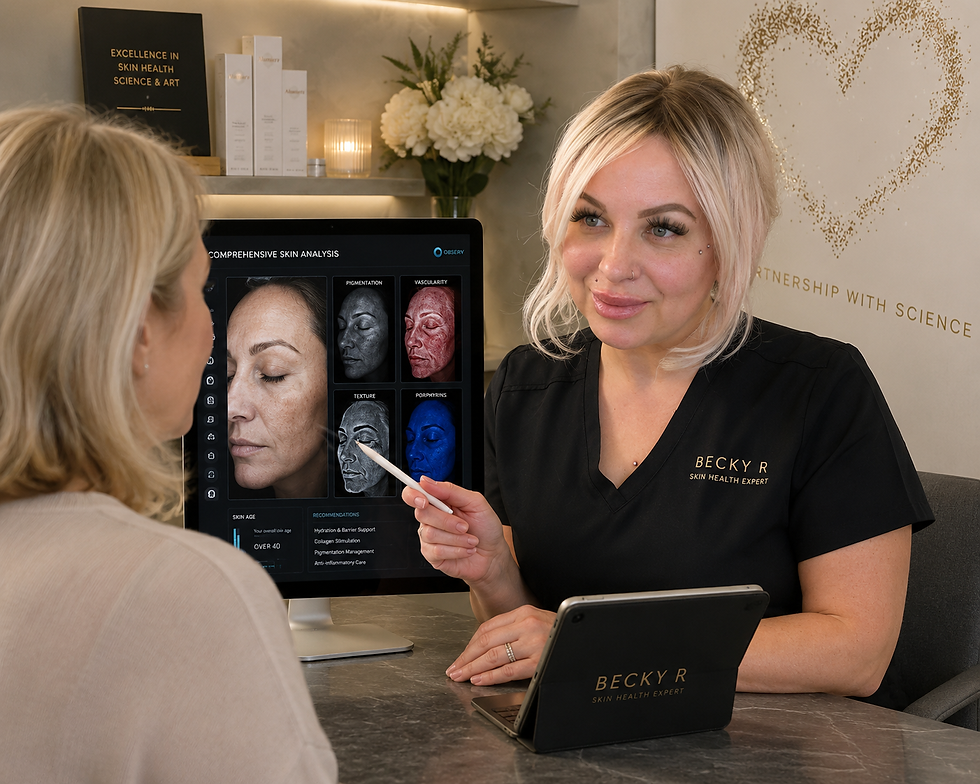
It is to work out what has actually changed, what is causing the concern, and whether a treatment is likely to improve it. Sometimes that leads to an injectable. Sometimes a different skin treatment makes more sense. Sometimes skincare needs sorting out first.
And occasionally, the most useful thing we can say is that the treatment someone arrived asking for is unlikely to solve the problem they want solved.
That is not a failed consultation. That is exactly what the consultation is there for.

The bottom line
PDRN, Profhilo and Sculptra are often grouped together because all three can sit within a broader conversation about ageing skin and natural-looking treatment. But that is roughly where the neat comparison ends.
PDRN and polynucleotides are DNA-derived materials with promising evidence around skin quality and tissue-supporting biological activity, although the aesthetic evidence base is still developing and terminology remains frustratingly inconsistent.
Profhilo uses specialised hyaluronic-acid complexes and has its strongest clinical story around hydration, elasticity, skin quality and laxity. Its evidence base is growing, although industry involvement in parts of that research should be acknowledged.
Sculptra is a PLLA collagen biostimulator. Its effects develop more slowly and may extend beyond superficial skin quality into gradual soft-tissue and volume change, depending on the indication and individual response. There is clinical evidence behind it, but the literature still contains limitations, bias and unanswered questions. None is objectively “best”. The better question is much less glamorous:
What has actually changed in your skin or facial anatomy — and which treatment, if any, addresses it?
That may not make the most exciting TikTok. It is considerably more likely to lead to a good result.
Common questions
Is PDRN better than Profhilo?
Not inherently. They are different materials with different treatment objectives. Profhilo has a strong focus on hydration, elasticity and laxity, while PDRN and PN treatments are being explored particularly for skin quality and tissue-supporting effects.
Is PDRN the same as polynucleotides?
They are closely related, but the terms should not automatically be used interchangeably. PDRN generally refers to shorter DNA fragments and PN to longer-chain polymers, although there is currently no universally agreed nomenclature standard.
Is Profhilo a filler?
It contains hyaluronic acid but is not used like a conventional volumising dermal filler. Its role is much more closely associated with hydration, elasticity and skin quality.
Is Sculptra a filler?
It can lead to increased soft-tissue volume, but it works differently from conventional hyaluronic-acid filler. Its PLLA particles trigger a gradual tissue response that includes collagen formation.
Can Sculptra be used under the eyes?
The manufacturer's instructions state that Sculptra should not be injected in the peri-orbital area. (galderma.com)
Which is best for under-eye skin?
That depends on what is actually causing the concern. Thin skin, pigmentation, vascular show-through, structural hollowing, oedema and fat prolapse are different problems and should not automatically receive the same treatment.
Which stimulates the most collagen?
There is not good comparative clinical evidence allowing a scientifically defensible ranking across all three. Sculptra is specifically studied and classified as a PLLA collagen biostimulator. Profhilo and PN/PDRN have different proposed mechanisms and should not be ranked simply by how often their marketing uses the word collagen.
Can any of these replace a facelift?
No. Non-surgical treatments can improve selected aspects of skin quality, laxity and volume. They cannot reproduce the surgical repositioning of significantly descended tissue.
Not sure which treatment actually fits your skin?
That is exactly what the consultation is for.
At No.1 Urban Aesthetics, we assess the concern first and the treatment second. Whether you are considering polynucleotides, Profhilo, skin boosters or another approach entirely, the aim is not to squeeze you into the latest trend — it is to work out what is most likely to help.
Book a consultation with our nurse-led team in Newcastle-under-Lyme and get a treatment plan built around your skin, not the algorithm.
