Azelaic Acid vs Niacinamide: Which Is Better for Redness, Spots and Marks?

T H E U R B A N S U P P L E M E N T / INGREDIENT INTELLIGENCE
SKIN SCIENCE · PRODUCT EDIT · UK 2026
By Rebecca (Bex) Beckett, Registered Nurse & Director, No.1 Urban Aesthetics. An evidence-led editorial guide; no personal product testing is claimed.
ADVERTISING DISCLOSURE | This feature includes Amazon UK affiliate links. If you buy through one of them, No.1 Urban Aesthetics may receive a commission without additional cost to you. Product inclusion does not mean it is medically recommended for your circumstances.
Two ingredients have become remarkably good at selling the same promise: calmer-looking skin, fewer visible marks and something resembling an even complexion. Azelaic acid and niacinamide appear beside one another on countless skincare lists, often as though one must win. Their mechanisms, evidence and most sensible uses are different. If the concern is inflammatory acne or rosacea, medicinal azelaic acid has a much more direct clinical role. If the concern is a fairly uncomplicated cosmetic routine, niacinamide may already be present in a moisturiser and there may be little reason to buy another serum.
There is a further complication rarely addressed in a quick online recommendation: concentration is not the same as effectiveness. A cosmetic azelaic-acid suspension containing 10% is not the preparation used in trials of prescribed 15% or 20% treatments. Meanwhile, much of the published evidence for cosmetic niacinamide involves concentrations below the familiar 10% printed on a dropper bottle. This article looks at both ingredients, two real Amazon UK product listings and the decisions that matter before either becomes another item in the bathroom cabinet.
The useful question is not which active is stronger. It is whether the skin concern has been understood accurately enough for either ingredient to make sense.
01 / Two ingredients, different jobs
Azelaic acid is a dicarboxylic acid with anti-inflammatory and antimicrobial properties. It can affect follicular keratinisation, which is relevant to acne, and has actions on pathways involved in excess pigment production. This helps explain why azelaic acid appears in discussions about blemishes, rosacea and some forms of post-inflammatory hyperpigmentation. It is well established as an ingredient in prescription dermatology; however, effectiveness depends on the indication, vehicle, strength, application frequency and duration of treatment.
The distinction between a medicine and a cosmetic is not cosmetic in the usual sense of the word. In UK acne guidance, topical azelaic acid appears among treatment choices in clinical circumstances, including as part of combinations for moderate-to-severe acne. Evidence from such regimens cannot simply be transplanted onto the marketing copy for a 10% over-the-counter suspension. A product can contain the same named molecule and still have a different evidence base, tolerability profile and intended purpose.
Niacinamide is a form of vitamin B3 and a familiar component of modern skincare. It is associated with epidermal barrier support, regulation of aspects of sebum production, reduced appearance of some pigmentation and improvements in the look of skin texture. The pigmentation story is particularly interesting: laboratory and human research suggests niacinamide can influence the transfer of melanosomes to surrounding skin cells, rather than acting through precisely the same pathway as azelaic acid.
That mechanism is useful background, not a promise that every niacinamide serum will lighten every facial mark. Clinical studies vary in design, formulations and endpoints. One frequently cited study examined moisturisers containing 5% niacinamide; others have assessed combinations with sunscreen or other actives. Much less can be concluded about any specific 10% formula without studies on that formula itself. Nor does a higher percentage automatically mean a better result. Higher-strength leave-on formulas may be unpleasant for some reactive skin.
The two ingredients are therefore not strict substitutes. Azelaic acid has a more specific connection to certain inflammatory skin conditions and pigment concerns, while niacinamide has a broad role in cosmetic skin maintenance. Either may produce stinging, redness or irritation, especially when layered with too many new treatments. Neither should be used to avoid assessment of a persistent eruption, changing lesion or painful skin condition.
What the labels do not tell you
A percentage is only one part of a formulation. A water-based niacinamide serum and a silicone-rich azelaic suspension behave differently on the skin. Spreadability, pilling under make-up, compatibility with sunscreen, preservatives and the rest of the ingredient list influence whether a product gets used regularly. The person buying it is not a laboratory sample. If a formula is uncomfortable or impossible to fit into a routine, its theoretically attractive ingredient list becomes less relevant.
It is also worth checking whether niacinamide is already present in a moisturiser, sunscreen or multi-active product. Purchasing a separate serum can be duplication dressed as precision. Conversely, an ingredient may be present at a low level within a complicated formulation without sufficient information to predict a particular clinical outcome. Packaging rarely supplies the context.
02 / Redness, breakouts and the marks left behind
Begin with an uncomfortable fact: redness is a symptom, not a diagnosis. Acne, rosacea, irritant contact dermatitis, eczema and seborrhoeic dermatitis can all cause a red face; their management is not interchangeable. Someone experiencing recurrent central facial flushing or inflamed papules may be dealing with rosacea. Someone with comedones, pustules and scarring may have acne. Another person may simply have compromised their skin barrier by adding acids, retinoids and harsh cleansing to the same routine.
Azelaic acid is of genuine interest in acne and papulopustular rosacea, but selecting appropriate treatment means assessing severity and diagnosis. Persistent eye irritation in the setting of rosacea-like symptoms, substantial pain, extensive inflammatory acne or emerging scars warrants clinical attention. Buying a cosmetic product after seeing a reassuring social-media photograph may delay more useful management.
Post-blemish marks need their own conversation. Brown or grey-brown discolouration following inflammation is often called post-inflammatory hyperpigmentation. Red or pink marks can be post-inflammatory erythema, which involves vascular change. Depressed and raised acne scars involve altered skin structure. All three may be described by a patient as 'scarring', but they are not the same. A serum aimed at pigment will not correct an indented scar by changing the colour of the surface.
Skin tone matters as well. People with more deeply pigmented skin can experience prominent and persistent post-inflammatory hyperpigmentation, and inflammatory damage from unsuitable treatment may make matters worse. Advice should be individualised, with sensible sun protection and avoidance of unnecessary irritation. There is no reason to pursue maximal exfoliation simply because a mark is slow to fade.
What of niacinamide? A tolerable niacinamide-containing moisturiser may suit a fairly ordinary daily routine where barrier support and cosmetic unevenness are the concerns. This is distinct from telling someone with active inflammatory acne that a 10% cosmetic serum will treat the disease. The absence of prescription status or the word 'acid' on the front label does not make an ingredient universally gentle.

At a glance: which concern points where?
Inflammatory acne or suspected rosacea: seek assessment when needed; medicinal azelaic acid is a clinical option in appropriate circumstances, not interchangeable with cosmetic skincare.
Mild oiliness or an uncomplicated daily routine: niacinamide may be practical, particularly if already included in a moisturiser that suits you.
Brown post-blemish marks: identify the pigment problem, minimise fresh inflammation and prioritise sunscreen. Both actives have relevant research, but results are not guaranteed.
Red marks or true acne scars: do not assume a pigment serum will address a vascular change or structural scarring. The distinction changes what is worth spending money on.
03 / The product edit: two recognisable formulas
For the shopping comparison we have deliberately chosen two specific 30 ml listings from The Ordinary, rather than inventing an expensive-versus-cheap contest. Both have recognisable ingredient concentrations and accessible product information. Their respective Amazon.co.uk ASINs were checked against individual product pages. This is an editorial examination of their formulations and positioning, not a claim that Rebecca Beckett has personally used or independently tested either bottle.
There are no fabricated 'was' prices, projected savings, review scores or claims about stock in this article. The Amazon listing, including seller and availability, may change. Amazon can also contain third-party offers, so readers should check the seller and the final product listing carefully before ordering.
PRODUCT 01 / THE AZELAIC FORMULA
The Ordinary Azelaic Acid Suspension 10% · 30 ml
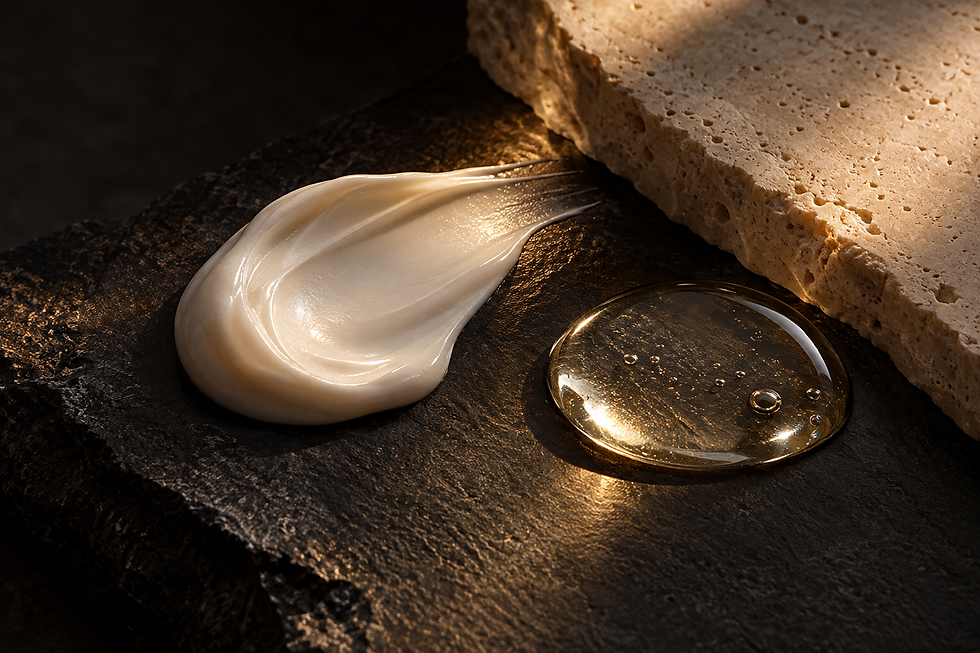
This is a cream-like, silicone-containing suspension rather than a conventional transparent, watery serum. The brand describes it as a formula for uneven skin tone and texture, and lists azelaic acid alongside a base containing dimethicone and other formulation components. That vehicle gives it a particular finish and may behave differently under a sunscreen or foundation from a lightweight gel. Practical compatibility matters if the product is to be used consistently.
The reason to consider it is the ingredient's relevance to the appearance of blemish-prone skin and uneven pigmentation. The reason for caution is that evidence for prescription azelaic acid in acne or rosacea is not equivalent to a clinical trial of this exact 10% consumer formulation. It would be inappropriate to suggest this Amazon product replaces prescribed treatment, or that it reliably treats persistent rosacea, post-acne marks or scarring for everyone.
Verified individual Amazon UK listing (ASIN B0BBLZ2YBP): The Ordinary Azelaic Acid Suspension 10%, 30 ml
Best understood as a cosmetic formula worth comparing against other skincare options if uneven-looking skin is the concern, rather than a substitute for assessment of active inflammatory disease.
PRODUCT 02 / THE NIACINAMIDE FORMULA
The Ordinary Niacinamide 10% + Zinc 1% · 30 ml
This product takes a quite different approach: a water-based serum with 10% niacinamide and zinc PCA. The Ordinary markets it around oil control, smoothing and brightening. The zinc is part of its formulation, but the presence of zinc in a cosmetic ingredient list should not be presented as proof of medicinal acne efficacy. Similarly, the headline 10% concentration should not be used to dismiss the lower percentages studied in published research.
For a reader who enjoys a lighter serum format, the texture may be more appealing than a suspension. Still, it makes sense to read the ingredient list and inspect what is already in the routine before buying. A suitable moisturiser containing niacinamide may be enough. If a high-concentration niacinamide serum produces flushing or persistent irritation, there is no benefit in continuing merely because the percentage appears impressive.
Verified individual Amazon UK listing (ASIN B01MDTVZTZ): The Ordinary Niacinamide 10% + Zinc 1%, 30 ml
Best understood as an optional targeted cosmetic serum for visible oiliness and uneven-looking skin, with evidence for the wider ingredient category rather than demonstrated outcomes for every purchaser of this formulation.

A more useful comparison than price alone
There is no convincing reason to choose by bottle size alone when both products come in 30 ml formats. Their texture and clinical context matter more. The azelaic suspension is the more condition-directed ingredient conceptually, but the specific cosmetic strength should temper expectations. The niacinamide serum is easier to think of as a general formulation choice, although its high concentration is not evidence of superiority. Neither is an essential purchase for every skin type.
Buying from a marketplace adds an additional question: are you comfortable with the seller and product provenance? Check the description against the manufacturer's own current product information, confirm the sealed item and review the return conditions. A cheap formula becomes an expensive mistake when the listing does not correspond to the actual product expected.
04 / Building a routine that your skin can tolerate
The central discipline in active skincare is restraint. If the skin is calm, comfortable and improving, a new serum is not necessarily an upgrade. If the skin is stinging after cleansing, flaking persistently or reacting to almost everything, the immediate priority is not to add another active. A gentle cleanser, a moisturiser the skin tolerates and suitable sun protection provide a more sensible starting point.
For someone introducing either ingredient, establish one change at a time. Follow the manufacturer's current instructions rather than imposing a generic twice-daily regimen. Begin conservatively if the skin is reactive, apply to intact skin and observe what happens over time. Do not assume that every occasional tingling sensation is a sign that a product is 'working'. A substantial or persistent reaction deserves attention, not another layer of moisturiser to make an unsuitable product tolerable.
Where azelaic acid is being prescribed to treat a skin condition, follow the clinician's advice about how often and how long to use it. Where a cosmetic niacinamide product is being added, remember that it can coexist with many other ingredients in principle but might still be redundant or irritating in a particular routine. Using both is not inherently forbidden; it simply creates more variables, so introduce them separately rather than beginning them together.
Morning routines need not be elaborate. Cleanse if needed, apply prescribed products according to guidance, moisturise as appropriate and use a broad-spectrum sunscreen suitable for your skin. An evening routine can be equally straightforward. Excessive cleansing, hard scrubs and an enthusiastic collection of overlapping acids rarely compensate for inconsistency in the basics.
Sun protection is particularly important when the concern is pigment. Ultraviolet radiation can sustain or worsen some pigmentation patterns, and visible light may also play a role in post-inflammatory hyperpigmentation, particularly in darker skin. A practical approach considers application quantity, reapplication, outdoor exposure and whether the person will actually wear the product. SPF on a decorative shelf offers remarkably little protection.
A photograph in the same light every few weeks may help a person judge whether a routine is achieving something noticeable, but photographs also deceive. Camera exposure, skincare immediately before the picture, make-up, the menstrual cycle and redness from heat can all alter an appearance. The purpose is to make a reasonable decision about a product, not to conduct a home trial pretending to be clinical research.
When to stop shopping and seek an opinion
Persistent or painful acne, progressive scarring, marked or unexplained facial redness, eye symptoms with suspected rosacea, rapidly changing pigmentation or a worsening rash should prompt appropriate medical assessment. People who are pregnant, breastfeeding, taking prescribed dermatological treatments or managing a diagnosed skin disorder should check individual product suitability and treatment plans rather than rely on a general buying guide.
There is also a commercial point worth stating. Someone selling a product or treatment has an interest in persuading you it is useful. Good clinical judgement makes room for the possibility that you need neither. At No.1 Urban Aesthetics, the appropriate discussion is about the actual skin concern and available evidence rather than the number of products that can be squeezed into an evening routine.
05 / The verdict, without a winner's podium
If acne or papulopustular rosacea is the question, medicinal azelaic acid deserves a serious evidence-based conversation. If the question is modest cosmetic oiliness, a fairly uncomplicated routine or the appearance of mild unevenness, niacinamide may be a sensible consideration and may already be present in your existing skincare. If the concern is post-inflammatory hyperpigmentation, the correct diagnosis, prevention of continuing inflammation and consistent sun protection are just as important as any serum choice.
What is not supported is the easy promise that a 10% bottle will solve a complex dermatological problem, or that stacking both ingredients will produce double the benefit. The published evidence differs by strength, formulation, clinical condition and outcome. A person with a reaction to a product does not need to prove persistence by continuing with it. The routine should work for the skin, not the other way round.
Both featured products can be found via the individual Amazon UK links above. Neither product is endorsed as the best choice for an unidentified reader. The purpose of the product edit is to make the differences visible and allow readers to assess what, if anything, they are paying for.
Evidence, further reading and publication notes
NICE NG198, Acne vulgaris: management (updated April 2026). The guideline covers assessment, appropriate topical/oral regimens and escalation.
NHS patient information: acne and rosacea. Symptoms and clinical red flags should guide whether self-directed skincare is appropriate.
Hakozaki et al., British Journal of Dermatology, 2002. Investigated niacinamide, melanosome transfer and human pigmentation endpoints.
Niacinamide clinical evidence overview (2021). A review discussing variable strengths and different cosmetic outcomes.
The Ordinary product information: Azelaic Acid Suspension 10%. Ingredient lists can change; check current packaging.
More from The Urban Supplement: our comparison of seven anti-ageing serums and the clinic's acne treatment information.
EDITORIAL DISCLOSURE | This article is an Amazon Associates advertisement when it contains qualifying Amazon product links. No Amazon star ratings, live prices or purported savings are reproduced. Neither The Ordinary product was represented as personally tested by Bex. The images are original, illustrative editorial work, not manufacturer product photography. No.1 Urban Aesthetics is a commercial Dermalogica partner; no Dermalogica product is recommended in this feature.
Clinical information here is educational and does not replace individual diagnosis, professional assessment or treatment advice. Product composition, sellers and availability may change.
Ad — The following link is an Amazon affiliate link (paid link). As an Amazon Associate I earn from qualifying purchases.
