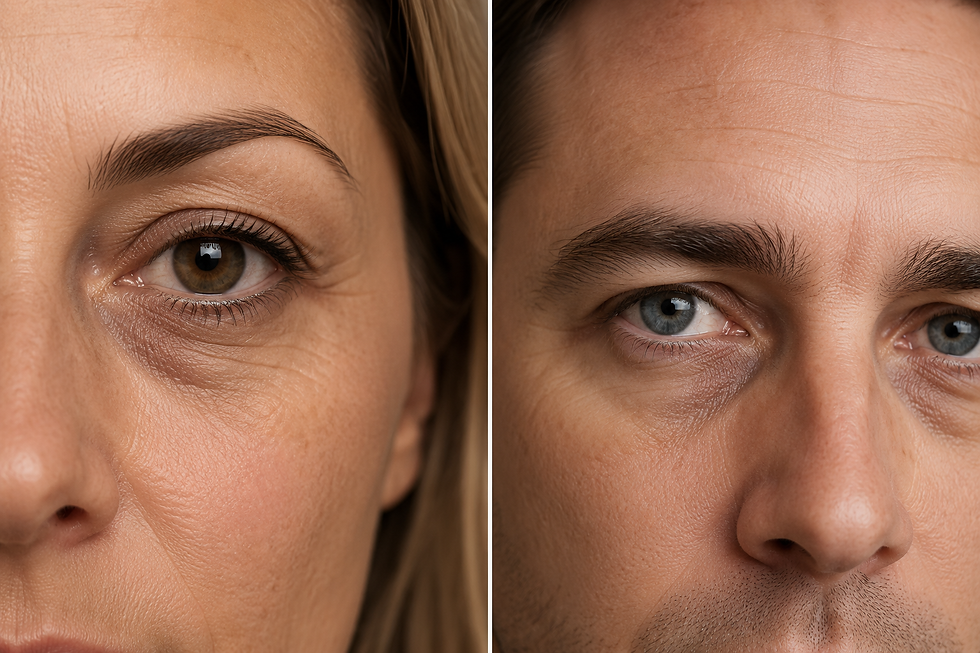
Biohacking Your Skin: Peptides, Skin Longevity and What Actually Matters

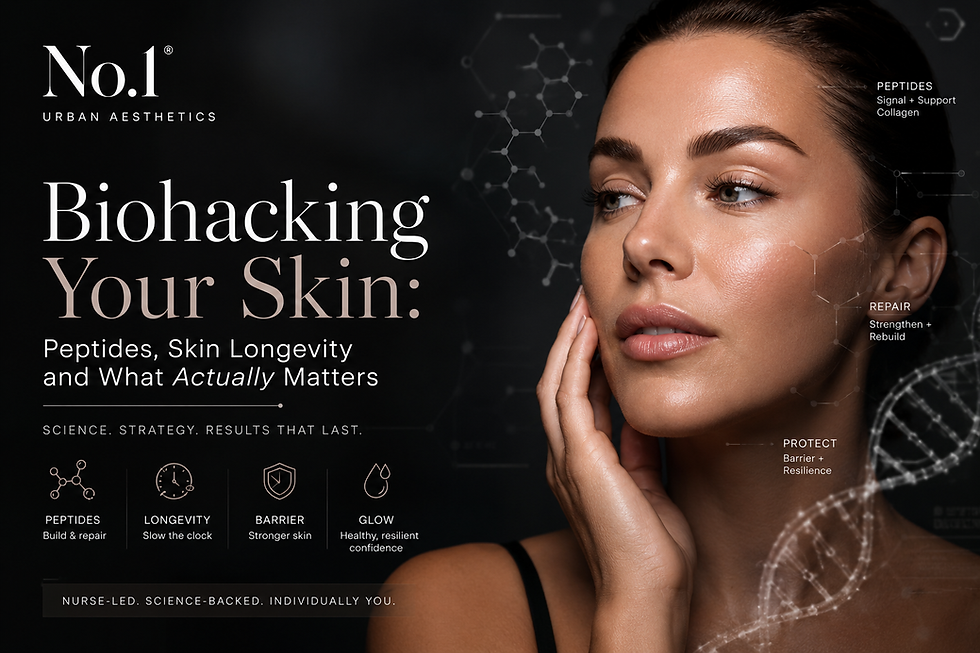
Biohacking has become one of those words that can mean almost anything. For some people it means sleep tracking, protein targets, red light, cold exposure and trying to squeeze every last drop of performance out of the body. Now skin has been pulled into that world too, and peptides are right at the centre of the conversation.
I am not against innovation. Far from it. Some of the most exciting developments in skin health are about working with the skin rather than fighting it. But there is a big difference between intelligent skin optimisation and throwing every trending ingredient at your face and hoping for the best. One is clinical thinking. The other is chaos with better packaging.
This is a nurse-led look at skin biohacking, peptides, collagen support, barrier repair, skin longevity and the professional treatments that may sit alongside a good homecare routine. It is written for people who want better skin, not a bathroom shelf that looks like a chemistry cupboard.
Related reading: The Skin You're In and The Shift After Forty
What does biohacking your skin actually mean?
In clinic, I think of skin biohacking as a practical, evidence-informed approach to helping the skin function better for longer. It is not about looking 25 forever. It is about supporting barrier function, hydration, collagen quality, inflammation control, repair pathways and healthy cell turnover. It is about making the skin more resilient, not bullying it into submission.
That may sound less glamorous than “reverse ageing overnight”, but it is far more honest. Skin is living tissue. It responds to what we put on it, what we do to it, what we feed it, how we sleep, how much UV exposure it gets, how hormones are behaving, and how much inflammation the body is carrying. No serum can outwork daily sun damage, poor sleep, harsh cleansing and a damaged skin barrier.
Real skin biohacking is not extreme. It is the clever stacking of sensible habits: cleanse properly, protect from UV, support the barrier, use active ingredients with a purpose, treat inflammation early, feed the skin consistently, and use professional treatments when they are appropriate. That is not boring. That is how results are built.
Why skin longevity matters more than anti-ageing
The phrase anti-ageing has never sat perfectly with me. Ageing is not a disease. It is biology. But the quality of that ageing can vary massively. Some people age with good skin density, calm texture, even tone and strong barrier function. Others see early dehydration, crepiness, pigmentation, sensitivity, redness, sluggish healing or a sudden change in how the skin reflects light.
Skin longevity is a better way to think about it. It asks how we keep the skin functioning well for as long as possible. How do we support the structures that keep skin firm, hydrated and resilient? How do we avoid unnecessary inflammation? How do we reduce avoidable damage? How do we choose treatments that improve skin quality rather than simply chasing trends?
That is why the conversation around peptides is interesting. Peptides are not the whole story, but they sit within this wider movement toward tissue quality, repair, resilience and prevention. They are one tool in a much bigger clinical toolkit.
So what are peptides?

Peptides are short chains of amino acids. Amino acids are the building blocks of proteins, and proteins are central to the structure and behaviour of the skin. Collagen, elastin and keratin all depend on amino acid building blocks. In skincare, peptide ingredients are used because certain peptide sequences may help communicate with the skin, support hydration, assist barrier function, or influence the appearance of firmness, texture and fine lines over time.
The key word is may. Peptides are not all the same. A product saying “contains peptides” is not enough. Which peptides? In what formulation? At what concentration? Are they stable? Are they compatible with the rest of the formula? Are they being used on skin that can tolerate them? Are they part of a routine that includes SPF and barrier support? This is where marketing and clinical reality often part ways.
Broadly speaking, peptide skincare is often discussed in categories: signal peptides, carrier peptides, enzyme-inhibiting peptides, expression-line focused peptides and barrier-supporting peptides. That sounds very science-heavy, but for clients the practical question is simpler: what is this product supposed to help with, and is it the right step for my skin right now?
The peptide hype: useful, but not magic
Peptides can be a useful part of a modern skincare routine, particularly when the aim is long-term skin quality rather than dramatic overnight change. But they are not a replacement for every treatment. They do not lift a face that has lost structural support. They will not repair years of UV exposure in six weeks while you continue to skip SPF. They are useful, but they are not magic.
This is where skincare marketing can get ridiculous. It takes a promising ingredient and sells it as a miracle. In reality, peptides usually work best as part of a complete skin plan: gentle cleansing, barrier repair, hydration, antioxidants, retinoids where appropriate, SPF, professional treatments and realistic timelines. A peptide serum on its own is not a skin strategy. It is one possible ingredient in a strategy.
I would rather a client buy three products that are right for their skin and use them properly than buy eight active serums because the internet has made them feel behind. More does not mean better. In skincare, more often means irritated, sensitised and expensive.
Cosmetic peptide skincare versus online wellness trends

This distinction matters. A peptide in a properly formulated topical skincare product is a cosmetic skincare ingredient. It is not the same thing as wider online wellness trends that use similar language. The internet often blurs those lines, and that is not helpful for clients.
At No.1 Urban Aesthetics, we keep the conversation grounded in skin health, product quality, professional assessment and safety.
If something is not appropriate, not clearly sourced, not clinically justified or not within a safe treatment plan, it does not belong in your skin journey. That may not be the most glamorous sentence in the world, but it is the one that protects people.
This is also why a nurse-led, consultation-first approach matters. People are not ingredient lists. They have medical histories, medications, hormones, stress levels, budgets, tolerance levels, skin barriers and expectations. A responsible plan takes all of that into account.
The foundations of skin biohacking
Before we talk about advanced products, we have to talk about the foundations. These are not glamorous, but they are powerful. If the basics are wrong, advanced products will not perform properly. Worse, they may irritate the skin and make people think the active ingredient is the problem, when actually the routine around it is the problem.
1. Barrier function
The skin barrier is your frontline defence. It helps control water loss, protects against irritants and supports a healthy microbiome. When the barrier is impaired, skin may feel tight, reactive, flaky, shiny-but-dehydrated, red, irritated or unpredictable. In that state, adding more actives is often not the answer.
Barrier repair may involve changing the cleanser, reducing exfoliation, improving moisturiser choice, introducing barrier-supportive ingredients, and simplifying the routine. Only when the skin is calmer does it make sense to layer more targeted ingredients such as peptides, retinoids, acids or vitamin C.
2. Daily SPF
If you want skin longevity, SPF is not optional. UV exposure is one of the major drivers of visible skin ageing, pigmentation, collagen degradation and texture change. You can spend a fortune on peptides and professional treatments, but if the skin is being damaged daily by UV, you are constantly trying to repair what you continue to injure.
This does not mean hiding indoors or becoming terrified of daylight. It means consistent, sensible protection. A daily broad-spectrum SPF is one of the most boring and most effective skin longevity tools we have. The best SPF is the one you will actually use every day.
3. Cleansing without stripping
Cleansing should remove what needs removing without leaving the skin feeling squeaky, tight or punished. Over-cleansing, harsh foaming cleansers and aggressive scrubbing can all compromise the barrier. If you are reviewing your routine, do not underestimate the cleanser. It is often the product people think matters least, yet it can be the step that quietly makes or breaks tolerance to everything else.
4. Active ingredients with a purpose
Active ingredients should earn their place. Retinoids, acids, vitamin C, niacinamide, peptides and exfoliants can all be useful, but not all at once and not for everyone. A routine should have a reason. If you cannot explain why a product is there, it may not need to be there.
This is one of the reasons we like consultation-led skincare. It stops the guesswork. It also stops clients spending money on products that are individually good but collectively wrong for their skin.
Peptides versus retinoids, vitamin C and regenerative treatments
A lot of clients ask which ingredient is best. Peptides? Retinoids? Vitamin C? Regenerative treatments? The honest answer is: best for what, and for whom? These categories do different jobs. Comparing them as if they are all trying to do the same thing is where confusion starts.

Retinoids are often used for cell turnover, texture, acne-prone skin, pigmentation support and collagen-related ageing concerns, but tolerance matters. Vitamin C is often used for antioxidant support and brightness, but formulation stability matters. Peptides are often used for skin quality, hydration, barrier support and visible firmness support, but they are not instant. Professional regenerative treatments sit in a different part of the conversation and require individual assessment.
For a deeper clinic discussion around structural skin quality, collagen and regenerative therapies, read The Shift After Fortyttps. For personalised skincare and collagen longevity, read The Skin You're In. For under-eye concerns, including dark circles and peri-orbital ageing,
see the blog on Peri-orbital treatments
What I look for before recommending peptide skincare
Before I recommend any active ingredient, I want to understand the skin in front of me. Is the barrier impaired? Is the skin dehydrated or genuinely dry? Is there pigmentation, redness, sensitivity, acne, menopause-related change, texture, crepiness, laxity, or simply a routine that is doing too much? A peptide product may be helpful, but it may not be step one.
Sometimes the first job is to repair the barrier. Sometimes it is to introduce SPF properly. Sometimes it is to reduce inflammation. Sometimes it is to stop people using too many actives at once. Skin does not care what the trend is called. It cares whether the routine is tolerable and biologically sensible.
When the foundation is right, peptides can be a beautiful addition. They may be especially useful for clients who want to support skin quality without aggressively exfoliating or irritating the skin. They may also sit well in routines focused on hydration, resilience, barrier function and visible texture. But they still need to be matched to the person.
The role of Dermalogica and professional skincare
Professional skincare changes the game because it starts with assessment. At No.1 Urban Aesthetics, we are not interested in selling a routine because it looks good on a shelf. We want to understand your skin, your current routine, your history, your tolerance, your lifestyle and your goals. Then we can build something that makes sense.

Dermalogica sits well within this because it allows us to combine professional treatments with personalised homecare. For some clients that may mean barrier repair and hydration. For others it may mean brightening, resurfacing, ageing support, acne support, sensitivity support or a phased routine that gradually introduces actives without overwhelming the skin.
This is the part people often miss. A professional skincare plan is not just a shopping list. It is sequencing. What do we start? What do we pause? What do we introduce later? What should only be used at night? What should not be combined? What needs SPF? What needs gradual introduction? That is where the value sits.
Collagen banking: the grown-up version of prevention
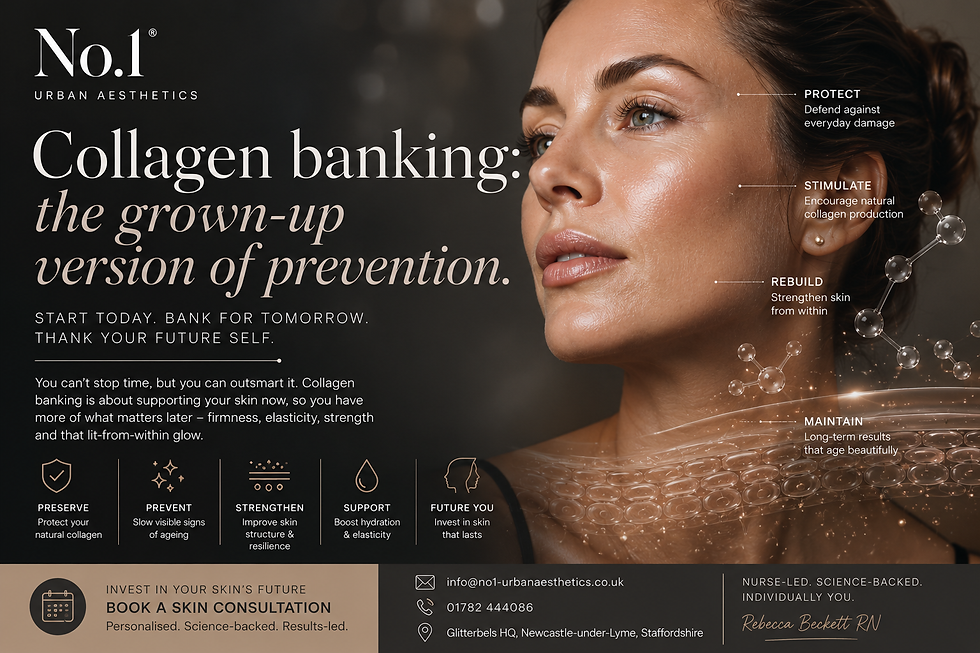
Collagen banking is the idea of protecting and supporting collagen before changes become more difficult to improve. It is not about panic. It is about not waiting until skin quality has collapsed before caring about it. The earlier you support skin health, the more options you tend to have.
Collagen support is not one product. It includes UV protection, appropriate actives, adequate protein, sleep, managing inflammation, professional treatments such as microneedling where suitable, and regenerative skin-quality approaches when clinically appropriate. Peptides may form part of that homecare support, but they are not the whole bank account.
Think of it like finances. You do not retire comfortably because you bought one clever thing once. You build consistency over time. Skin behaves in a similar way. The boring deposits often matter more than the dramatic splurge.
Professional treatments that may support skin longevity
Skincare is the daily foundation, but professional treatments can help when we want to target concerns more actively. The right treatment depends on the individual, but common skin quality routes include Dermalogica PRO treatments, microneedling, skin boosters, polynucleotide-style regenerative treatment planning, peri-orbital treatment planning and treatment plans aimed at hydration, texture, crepiness, fine lines, dullness or barrier support.
Microneedling is often discussed in relation to collagen induction and texture, but it must be used appropriately. Skin boosters may support hydration and skin quality. Regenerative skin treatments may be considered where tissue quality, crepiness or repair support is a priority. Peri-orbital treatments require particular care because the eye area is anatomically delicate and not every concern is treated the same way.
This is why we do not believe in menu-led medicine or copy-and-paste treatment plans. The person with pigment, dehydration and barrier damage does not need the same approach as the person with laxity, crepiness and volume change. A proper consultation protects results and safety.
Biohacking myths I would happily retire
Myth 1: If it tingles, it is working
No. Sometimes tingling is expected with certain active ingredients, but persistent stinging, burning or redness is not a badge of honour. It is often a sign the skin barrier is unhappy. Good skincare should not feel like punishment.
Myth 2: More actives mean faster results
More actives often mean more irritation. A well-built routine is not judged by how many fashionable ingredients it contains. It is judged by whether the skin improves and remains stable. Consistency beats chaos.
Myth 3: Peptides replace professional treatments
They do not. Peptides in skincare may support skin quality, hydration and the appearance of firmness, but they do not replace every professional treatment. They are a different category and should be understood as part of a wider plan.
Myth 4: Expensive always means better
Price can reflect research, formulation and quality, but it can also reflect branding. What matters is whether the product is appropriate, stable, tolerated and useful within your routine. The best skincare is not always the most expensive. It is the one that is right for you.
Myth 5: Natural automatically means safer
Natural ingredients can irritate. Synthetic ingredients can be beautifully tolerated. The skin does not make moral judgements about marketing language. It responds to chemistry, formulation, concentration and context.
What a sensible skin biohacking routine might look like
A sensible routine might begin with a gentle cleanser, a barrier-supportive moisturiser, daily SPF and one or two targeted active ingredients. For someone focused on longevity, that might include an antioxidant in the morning, SPF every day, and a night-time routine that alternates active support with recovery. Peptides may sit in either morning or evening depending on the formulation and the rest of the routine.
For someone with sensitivity, we may simplify everything first. For someone with dullness and texture, we may plan professional resurfacing or microneedling later. For someone with crepiness, dehydration or peri-orbital ageing, we may look at a combination of homecare, professional treatments and regenerative options. For someone already using too many actives, the first prescription may be restraint. Nobody likes that answer, but often the skin loves it.
The point is not to make skincare complicated. It is to make it accurate.
How hormones, menopause and stress change the conversation
Skin does not exist separately from the rest of the body. Hormonal change, particularly peri-menopause and menopause, can affect skin thickness, hydration, collagen, barrier function, sensitivity and healing. Clients often tell us that their old routine suddenly stopped working. That is not vanity. It is biology changing the rules.

Stress also matters. Poor sleep, high stress load, inflammation, under-eating, crash dieting, dehydration and inconsistent routines can all show up in the skin. This does not mean blaming people for their skin. It means recognising that a good plan may need to include both product choices and lifestyle context.
This is where the word biohacking can be useful if we strip away the nonsense. Sleep, protein, hydration, alcohol moderation, stress management, movement, SPF and a routine you can actually stick to are all part of skin longevity. No serum gets to operate in isolation.
When to seek professional help
You should consider a professional skin consultation if your skin is reactive, you keep buying products that do not help, you are unsure which actives are safe to combine, you want to introduce peptides or retinoids properly, you are noticing menopause-related changes, you have pigmentation or acne concerns, or you want to plan treatments such as microneedling, skin boosters, regenerative skin treatments or Dermalogica PRO treatments.
A consultation is not just about selling treatment. It is about understanding what is appropriate, what is not appropriate, and what order things should happen in. Sometimes the safest and most effective plan is staged: calm the skin, repair the barrier, introduce homecare, then consider professional treatments. The sequence matters.
To view treatment routes and current pricing, use the pricing page: https://www.no1-urbanaesthetics.co.uk/pricing. If you are unsure which route fits your skin, email info@no1-urbanaesthetics.co.uk and we can guide you toward the right consultation rather than sending you down the wrong booking path.
Frequently asked questions
Do peptides in skincare really work?
Some peptide ingredients can be useful when they are well-formulated and matched to the right skin concern. They may support hydration, barrier function, visible firmness and skin quality over time. They are not instant, and they are not a replacement for every other active ingredient or treatment.
Can peptides help with collagen?
Certain peptide ingredients are used in skincare because they are associated with signalling pathways linked to collagen support and skin repair. However, collagen health depends on far more than peptides alone: SPF, active ingredient tolerance, nutrition, professional treatments, inflammation control and consistency all matter.
Are peptides better than retinol?
Not better — different. Retinoids and peptides do different jobs. Retinoids are often used for texture, cell turnover, acne-prone skin and ageing support, but they can be irritating. Peptides are often gentler and may support skin quality and barrier function. Many routines can use both, but not every skin should start with both.
Can I use peptides with vitamin C?
Often yes, depending on the products and formulation, but it depends on the specific routine and skin tolerance. If your skin is already irritated, adding more active ingredients is rarely the answer. A consultation can help sequence products properly.
What is the best biohacking skincare routine?
The best routine is the one that matches your skin, your lifestyle and your tolerance. For most people, the foundation is gentle cleansing, barrier support, daily SPF, hydration, antioxidant protection, and selected actives such as peptides or retinoids where appropriate. Professional treatments may be layered in once the basics are right.
The No.1 Urban approach
At No.1 Urban Aesthetics, our approach is simple: understand the skin first, then build the plan. We do not believe in frightening people into treatments, overcomplicating routines or pretending one ingredient can do everything. We believe in professional assessment, realistic expectations and skin plans that make sense.
That may involve Dermalogica skincare, a PRO treatment plan, microneedling, skin boosters, regenerative treatment planning, peri-orbital treatment planning or simply stripping a routine back until the skin calms down. The clever part is not doing everything. The clever part is doing the right things in the right order.
If you want to explore peptides, skin longevity, collagen support or a personalised skin routine, start here: PRICING.
For guidance before choosing, email info@no1-urbanaesthetics.co.uk.
You can also browse more skin articles here: BLOGS
Final thought

Peptides are interesting. Skin longevity is exciting. Biohacking can be useful when it is grounded in common sense. But the best skincare will always come back to one question: what does your skin actually need? Not what is trending. Not what someone else's skin tolerated. Not what the algorithm is shouting about this week. Your skin.
If we can answer that properly, we can build a plan that is safer, smarter and more likely to work. That is real skin biohacking. No ice bath required.
— Rebecca Beckett RN, No.1 Urban Aesthetics